Canada’s 10 Best Travel Credit Cards
Last updated February 13, 2026

Best Travel Credit Cards
No matter how often you travel or what your style is, travel credit cards are great for earning rewards, making points bookings, and enhancing your travel experience with elite benefits.
Read on to learn more about our recommendations for the best travel credit cards in Canada.
Best Overall Travel Credit Card
First-year value
$1,581
Annual fee: $799
• Earn 80,000 points upon spending $10,000 in the first 3 months
• Plus, earn 30,000 points Upon making a purchase between months 15 and 17 of Cardmembership
Earning rates
Key perks
- $200 annual travel credit
- $200 annual dining credit
- $100 NEXUS credit
- Unlimited Priority Pass lounge access
- Marriott Bonvoy Gold Elite status
- Platinum Concierge

Annual fee: $799
• Earn 80,000 points upon spending $10,000 in the first 3 months
• Plus, earn 30,000 points Upon making a purchase between months 15 and 17 of Cardmembership
Earning rates
Key perks
- $200 annual travel credit
- $200 annual dining credit
- $100 NEXUS credit
- Unlimited Priority Pass lounge access
- Marriott Bonvoy Gold Elite status
- Platinum Concierge
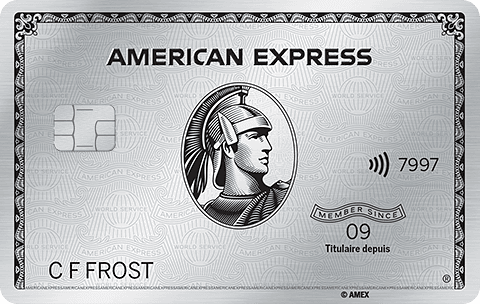
For premium rewards and benefits, the American Express Platinum Card reigns supreme.
Like its counterpart for business owners, the personal Platinum Card earns Membership Rewards points, the most flexible transferable rewards in Canada. You can get a strong welcome bonus when you apply through a refer-a-friend link.
In particular, Canadians can transfer MR points to Air Canada’s Aeroplan program, supplementing the points earned on other credit cards which carry the Aeroplan label. The best long-haul premium cabins on Air Canada’s partners can cost quite a few points, and cards with such a big welcome bonus are few and far between, so the Platinum Card is a great way to get you there more quickly.
If you spend a lot on dining and travel, you’ll earn 2 MR points per dollar spent, along with 1 MR point per dollar spent on all other purchases.
However, perhaps more so than everyday spending, the Platinum Card truly shines when it comes to airport lounges. You’ll get unlimited visits to Priority Pass lounges for you and one guest, as well as Plaza Premium lounges and American Express Centurion Lounges for you, your spouse, and two children under the age of 21 or one travelling companion.
For an elevated hotel experience, the card grants automatic Marriott Bonvoy Gold Elite status and Hilton Honors Gold status.
This would be useful if, say, your priority is the Marriott Bonvoy program and you maintain a higher status there like Platinum or Titanium, but you like to ensure a few token benefits for those odd stays at other hotel brands.
Finally, the Platinum Card is among the best-in-class for travel insurance, offering higher payouts and wider-ranging coverage than most other credit cards.
Best Travel Credit Card for Business Owners
First-year value
$1,914
Annual fee: $799
• Earn 90,000 points upon spending $15,000 in the first 3 months
• Plus, earn 40,000 points upon making a purchase between months 15 and 17
Earning rates
Key perks
- $200 annual travel credit
- $100 NEXUS credit
- Up to $200 annual Dell statement credit
- Up to $300 annual Indeed statement credit
- Up to $120 annual wireless services statement credit
- Unlimited Priority Pass lounge access

Annual fee: $799
• Earn 90,000 points upon spending $15,000 in the first 3 months
• Plus, earn 40,000 points upon making a purchase between months 15 and 17
Earning rates
Key perks
- $200 annual travel credit
- $100 NEXUS credit
- Up to $200 annual Dell statement credit
- Up to $300 annual Indeed statement credit
- Up to $120 annual wireless services statement credit
- Unlimited Priority Pass lounge access
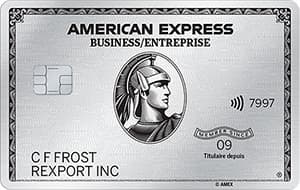
The Business Platinum Card from American Express is another top choice for anyone looking to use the power of their credit cards to reach their travel aspirations.
The card often comes with the biggest welcome bonus in Canada, typically in the ballpark of 100,000+ MR points, which can offer incredible value when transferred to an airline’s frequent flyer program. American Express has transfer partners in each of the three major airline alliances, so you’ll be able to fly to pretty much any destination.
For everyday spending, the card doesn't have the same category bonuses as the personal Platinum Card. Instead, it offers a stronger 1.25 MR points per dollar spent on all purchases, that’s an awesome base rate for the types of purchases that are likely to constitute the bulk of your business expenses.
Furthermore, if you’re collecting points with a spouse or other family members, the Business Platinum Card is the best card to start with. For every referral you make, when the applicant is approved for an American Express business credit card, you’ll receive an additional 20,000 MR points.
You’ll also get most of the same premium travel benefits as the personal Platinum Card, including automatic Marriott Bonvoy Gold Elite status, a $200 annual travel credit, access to Amex’s Fine Hotels and Resorts program, and unlimited Priority Pass airport lounge access for yourself and a guest.
And the best part is that you don’t need to be a business owner in the traditional sense to qualify for the card. You can apply as a sole proprietor, using your own name as the business name. As long as you don’t display abnormal spending patterns, Amex is unlikely to ask for a business registration document.
American Express also doesn’t have a minimum income requirement for this card, or any of their cards, so the only barrier to the incredible bonus and perks is your ability to meet the spending requirement.
Best Visa Card for Earning Frequent Flyer Miles
First-year value
$701
Annual fee: $599
• Earn 20,000 points on first purchase
• Earn 30,000 points upon spending $12,000 in the first 6 months
• Earn 50,000 points on card anniversary upon spending $24,000 in the first 12 months
Earning rates
Key perks
- Unlimited Maple Leaf Lounge access + 1 guest
- 6 Visa Airport Companion lounge visits per year
- Priority check-in, boarding, and baggage handling for cardholder + up to 8 companions
- Priority security at Toronto Billy Bishop, Montreal, Ottawa
- Free first checked bag for cardholder + up to 8 companions
- 1,000 SQC per $5,000 spend toward Aeroplan Elite Status (up to 25,000 SQC/year)
Annual fee: $599
• Earn 20,000 points on first purchase
• Earn 30,000 points upon spending $12,000 in the first 6 months
• Earn 50,000 points on card anniversary upon spending $24,000 in the first 12 months
Earning rates
Key perks
- Unlimited Maple Leaf Lounge access + 1 guest
- 6 Visa Airport Companion lounge visits per year
- Priority check-in, boarding, and baggage handling for cardholder + up to 8 companions
- Priority security at Toronto Billy Bishop, Montreal, Ottawa
- Free first checked bag for cardholder + up to 8 companions
- 1,000 SQC per $5,000 spend toward Aeroplan Elite Status (up to 25,000 SQC/year)
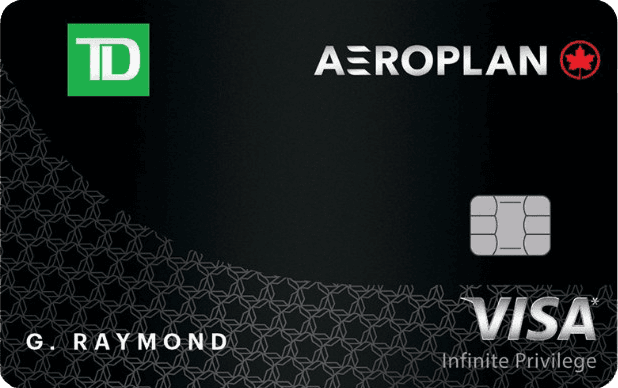
If you’d prefer to avoid the challenges of Amex’s limited acceptance, the TD® Aeroplan® Visa Infinite Privilege* Card is another great choice.
New cardholders can receive a very competitive welcome bonus, often on par with the Business Platinum Card from American Express. However, with lower or more drawn-out spending requirements, you're at less of a risk of missing out entirely in case your spending fluctuates or you accidentally miss a deadline.
Beyond that, you’ll earn 2x Aeroplan points on Air Canada flights and vacations, 1.5x Aeroplan points on gas, groceries, dining, food delivery, and travel, and a strong base rate of 1.25x Aeroplan points on all other purchases.
As for perks, the card has all of the same premium Aeroplan benefits as the American Express Reserve cards, with the added benefit of a DragonPass membership with six free lounge visits per year.
If the $599 annual fee is too steep, consider the TD® Aeroplan® Visa Infinite* Card instead. It has a lower annual fee and a smaller welcome bonus, and you’ll also have a lower earning rate, fewer Aeroplan benefits, and weaker insurance.
Best Travel Credit Card for Aeroplan Benefits
First-year value
$789
Annual fee: $599
• Earn 60,000 points upon spending $7,500 in the first 3 months
• Plus, earn 25,000 points upon spending $2,500 in month 13
Earning rates
Key perks
- Unlimited Maple Leaf Lounge access + 1 guest
- Priority check-in, boarding, and baggage handling for cardholder + up to 8 companions
- Free first checked bag for cardholder + up to 8 companions
- Priority airport services at YYZ
- 1,000 SQC per $5,000 spend toward Aeroplan Elite Status (up to 25,000 SQC/year)
- 10% Head Start toward Aeroplan Elite Status (starting 2027)

Annual fee: $599
• Earn 60,000 points upon spending $7,500 in the first 3 months
• Plus, earn 25,000 points upon spending $2,500 in month 13
Earning rates
Key perks
- Unlimited Maple Leaf Lounge access + 1 guest
- Priority check-in, boarding, and baggage handling for cardholder + up to 8 companions
- Free first checked bag for cardholder + up to 8 companions
- Priority airport services at YYZ
- 1,000 SQC per $5,000 spend toward Aeroplan Elite Status (up to 25,000 SQC/year)
- 10% Head Start toward Aeroplan Elite Status (starting 2027)
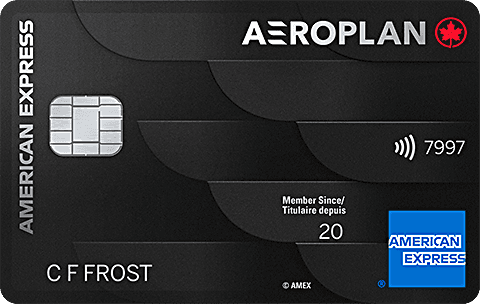
All of the premium Aeroplan co-branded cards come with the same Air Canada perks, but the American Express Aeroplan Reserve Card stands out thanks to its bigger incentives for cardholders.
Among other benefits, you’ll get unlimited Air Canada Maple Leaf Lounge access, free checked bags on Air Canada flights, priority treatment at the airport, and opportunities to spend your way to Aeroplan Elite Status.
If you most often travel on points, you’ll get the best preferred pricing for Aeroplan flight rewards on Air Canada flights. If instead you purchase a lot of cash fares or vacation packages from Air Canada, you’ll earn 3 Aeroplan points per dollar spent, the highest return you’ll find on any credit card in Canada.
You'll also get impressive earn rates on dining and uncategorized spending, putting this card at least on par with other premium Aeroplan credit cards in that regard, if not above them.
Plus, with additional perks from American Express such as regular rebates throughout the year and cash signup incentives, you can reduce or even eliminate the hefty $599 annual fee. Not to mention, you’ll get all of the standard Amex lifestyle benefits like Front of the Line ticket presale and exclusive event invites.
Best Travel Credit Card for Hotels
First-year value
$488
Annual fee: $120
• Earn 70,000 points upon spending $3,000 in the first 3 months
• Plus, earn 30,000 points upon spending $500 in month 13
Earning rates
Key perks
- Silver Elite status + 15 Elite Night Credits
- 35,000-point Free Night Award annually (year 2+)

Annual fee: $120
• Earn 70,000 points upon spending $3,000 in the first 3 months
• Plus, earn 30,000 points upon spending $500 in month 13
Earning rates
Key perks
- Silver Elite status + 15 Elite Night Credits
- 35,000-point Free Night Award annually (year 2+)
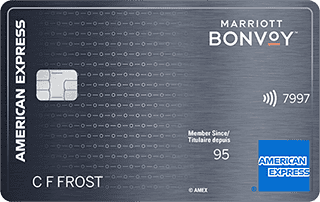
If you’re looking to enhance your hotel stays, the Marriott Bonvoy American Express Card is your best choice. The card offers great value even beyond its welcome bonus.
Starting in your second year with the card, you’ll get an annual Free Night Award for a single night priced at up to 35,000 Bonvoy points. That’s enough to cover a night at most mid-tier hotels. For longer stays, you can combine this with additional points or cash nights.
Also, when you have at least one Marriott Bonvoy co-branded credit card, you’ll automatically get 15 elite qualifying nights every year. Think of this as a leg up on your progress towards Platinum Elite status. Normally requiring 50 qualifying nights, you’d only be 35 away every year.
If that’s still out of reach, you’ll get Silver Elite status just by being a cardholder. You can also achieve Gold Elite status by staying 10 nights, or spending $30,000 per year on your Marriott Bonvoy credit card.
No matter your travel tastes, Marriott Bonvoy is a great hotel program. They have over 7,000 properties across 30 brands, a full range of accommodations from ultra-luxury to ultra-budget, and a comprehensive global footprint. With the ability to score some free stays on points, there’s something for everyone in this program and its co-branded credit cards.
Best No Fee Travel Credit Card
First-year value
$242
No annual fee
• Earn 10,000 points upon spending $1,000 in the first 3 months
Earning rates
Key perks
- Transfer to airline and hotel partners
No annual fee
• Earn 10,000 points upon spending $1,000 in the first 3 months
Earning rates
Key perks
- Transfer to airline and hotel partners
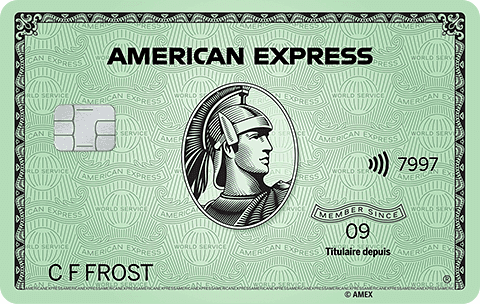
If you prefer to avoid paying annual fees, the American Express Green Card is the way to go. The card awards 10,000 MR points as a welcome bonus. There’s no easier or cheaper way to get started towards your travel dreams, and even students can qualify for the card.
That said, you might not earn points as quickly as you would with a premium card. Still, for everyday spending, it's hard to beat 1 MR point per dollar spent for no annual fee.
Also, as long as you remain a cardholder, your MR points won’t expire. If you have a big points balance with a premium card but no travel plans on the horizon, it’s a great way to avoid other more costly methods of keeping your rewards active.
Best Travel Credit Card for Beginners
First-year value
$560
Annual fee: $139First Year Rebate
• Earn 10,000 points on first purchase
• Earn 15,000 points upon spending $3,000 in the first 3 months
• Earn 25,000 points on card anniversary upon spending $12,000 in the first 12 months
Earning rates
Key perks
- Free first checked bag for cardholder + up to 8 companions
- 1,000 SQC per $20,000 spend toward Aeroplan Elite Status (up to 25,000 SQC/year)
- $100 NEXUS rebate every 48 months
- 4th night free on Aeroplan hotel redemptions
- Troon Rewards Silver (10% off at 95+ golf courses)
- Avis Preferred Plus (1 car-class upgrade)

Annual fee: $139First Year Rebate
• Earn 10,000 points on first purchase
• Earn 15,000 points upon spending $3,000 in the first 3 months
• Earn 25,000 points on card anniversary upon spending $12,000 in the first 12 months
Earning rates
Key perks
- Free first checked bag for cardholder + up to 8 companions
- 1,000 SQC per $20,000 spend toward Aeroplan Elite Status (up to 25,000 SQC/year)
- $100 NEXUS rebate every 48 months
- 4th night free on Aeroplan hotel redemptions
- Troon Rewards Silver (10% off at 95+ golf courses)
- Avis Preferred Plus (1 car-class upgrade)
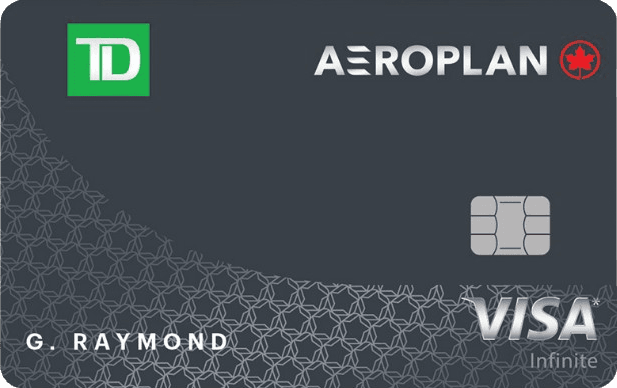
If you’re just getting started with credit card rewards, you might prefer to start with a mid-tier option like the TD® Aeroplan® Visa Infinite* Card.
The card often has an easy welcome bonus to achieve, with a low spending requirement up front and a long deadline to achieve the full bonus. It’s a good choice as you begin to grasp how to best use your travel rewards.
As for perks, you’ll get preferred pricing on Air Canada flight redemptions, your first checked bag free for your entire travelling party, and insurance on Aeroplan award tickets when you use the card to pay for fees and taxes. Also, your hard-earned points won't expire as long as you remain a cardholder, so you can take your time figuring out the best way to redeem them.
Best Travel Credit Card for Daily Spending
First-year value
$336
Monthly fee: $15.99
• Earn 1,250 points per month upon spending $750 per month for 12 months
Earning rates
Key perks
- Transfer to airline and hotel partners
Monthly fee: $15.99
• Earn 1,250 points per month upon spending $750 per month for 12 months
Earning rates
Key perks
- Transfer to airline and hotel partners
The best card for daily spending always depends on which categories you tend to spend the most on. For many people, the American Express Cobalt Card is a great way to maximize your points on everyday purchases.
The card earns 5 MR points per dollar spent at grocery stores, restaurants, bars, and food delivery. If those make up a large chunk of your expenses, the sheer number of points you’ll earn is unbeatable.
Membership Rewards points are very flexible, too. You can use them for flight redemptions with Aeroplan and other programs, hotel stays with Marriott Bonvoy, the Fixed Points Travel Program at a rate of up to 2 cents per point, or redeem for statement credit at a rate of 1 cent per point.
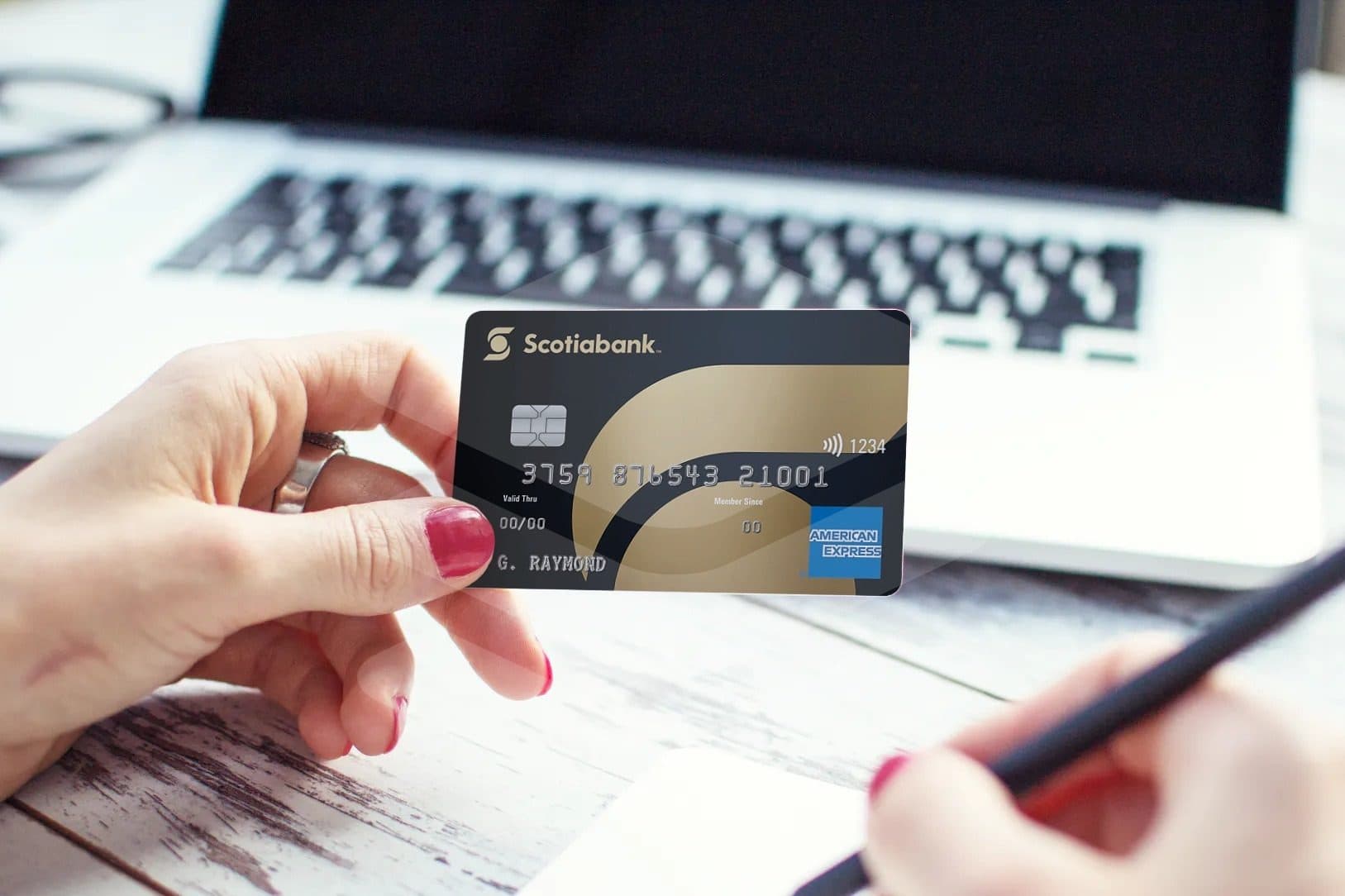
Alternatively, if you spend more than $30,000 per year ($2,500 per month) in the 5x bonus category, you might instead consider the Scotiabank Gold American Express® Card.
However, the Scotiabank card doesn’t have transferable points – the best you’ll do is 1 cent per point as statement credit for any travel purchase.
Best Premium Visa Travel Card
First-year value
$826
Annual fee: $399
• Earn 35,000 points on approval
• Earn 20,000 points upon spending $5,000 in the first 6 months
• Earn 45,000 points on card anniversary in the first 12 months
Earning rates
Key perks
- 6 Visa Airport Companion lounge visits per year
- Priority security at Toronto Billy Bishop, Montreal, Ottawa
- Visa RSVP Diamond at 60+ Sandman/Sutton hotels
- Troon Rewards Platinum (20% off at 150+ golf courses)
- Transfer to British Airways Avios, Cathay Asia Miles, WestJet, American Airlines
- DoorDash DashPass for 12 months
Annual fee: $399
• Earn 35,000 points on approval
• Earn 20,000 points upon spending $5,000 in the first 6 months
• Earn 45,000 points on card anniversary in the first 12 months
Earning rates
Key perks
- 6 Visa Airport Companion lounge visits per year
- Priority security at Toronto Billy Bishop, Montreal, Ottawa
- Visa RSVP Diamond at 60+ Sandman/Sutton hotels
- Troon Rewards Platinum (20% off at 150+ golf courses)
- Transfer to British Airways Avios, Cathay Asia Miles, WestJet, American Airlines
- DoorDash DashPass for 12 months
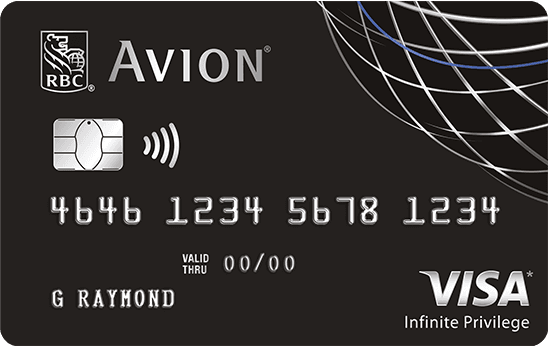
The RBC® Avion Visa Infinite Privilege† is RBC's top-tier travel card, and it delivers a unique value proposition that's hard to find elsewhere.
The card earns RBC Avion points at 1x on all purchases, but where it truly shines is in redemptions: you can redeem at 2 cents per point on business and first class bookings through RBC's travel portal, doubling the standard 1 cent per point rate on economy flights.
That 2 cpp rate on premium cabin bookings is a standout feature. The card also comes with six Visa Airport Companion lounge visits per year, priority airport services at select Canadian airports, and comprehensive travel insurance.
Avion points can be transferred to partners including British Airways Avios, Cathay Pacific Asia Miles, American Airlines AAdvantage, and WestJet Dollars, giving you solid flexibility for award bookings. The $399 annual fee is significant, but if you regularly book premium cabins, the value proposition can be compelling.
Best Travel Credit Card for Insurance
First-year value
$273
Annual fee: $89First Year Rebate
• Earn 15,000 points on first purchase
• Earn 35,000 points upon spending $3,000 in the first 6 months
Earning rates
Annual fee: $89First Year Rebate
• Earn 15,000 points on first purchase
• Earn 35,000 points upon spending $3,000 in the first 6 months
Earning rates
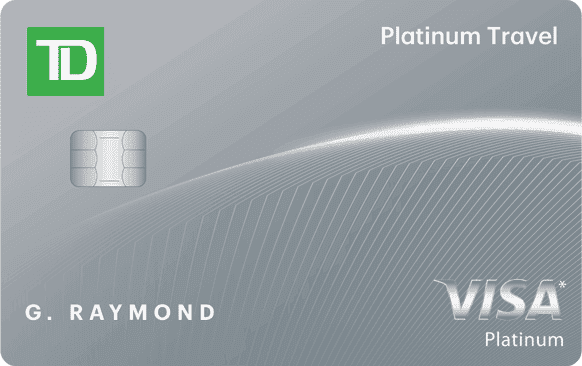
The TD Platinum Travel Visa* Card earns TD Rewards points at a rate of 1 point per dollar on all purchases, redeemable at 0.5 cents per point through the Expedia-for-TD travel portal.
While the earning structure is straightforward, the real reason this card earns its spot is its comprehensive travel insurance package. You'll get trip cancellation and interruption insurance, emergency medical coverage, flight delay insurance, and baggage delay coverage — all included with your card.
At $89 per year (rebated in the first year), it's an affordable way to ensure you're covered on every trip. The welcome bonus of 50,000 TD Rewards points provides a solid start, equivalent to $250 in travel when redeemed through the portal.
If insurance coverage is your primary concern and you want a card that protects you without a premium price tag, the TD Platinum Travel delivers reliably.
Travel Credit Cards: What You Need to Know
When choosing a travel credit card, you should familiarize yourself with what benefits a travel credit card can offer, what features to look out for, and how travel credit cards can fit into an optimized overall credit card strategy.
Why get a travel credit card?
Travel credit cards are the best choice for globetrotters, because the rewards can easily be redeemed above their face value.
Many rewards programs charge a fixed number of points for a wide range of redemptions, so you can increase the value you get for each point by maximizing the program’s sweet spots.
Not every traveller flies on points all the time, and there are plenty of situations where you’ll have to pay cash. Many travel cards give extra rewards on purchases on things like flights, hotels, vacation packages, tours, and other activities.
Even if travel isn’t a major part of your lifestyle, these cards may still be a good choice. Travel cards usually have the biggest signup bonuses, so even if you “cash out” the points for statement credit, they can still be worth more than getting a cash back credit card.
Also, travel cards tend to target the luxury market more than cash back cards. If you’re looking for premium service with your credit card, you’re more likely to find it on a card that earns travel rewards.
What should you look for in a travel credit card?
Not only will you earn points to use for flights and hotels, but good travel cards also come with many perks to enhance the overall travel experience.
Some cards offer ways to improve the ground experience at the airport. These benefits can be used regardless of which airline you’re flying with, or your class of service:
- Priority check-in
- Priority boarding
- Priority baggage handling
- Free NEXUS application
In particular, many premium travel cards come with complimentary airport lounge access:
- All Visa Infinite Privilege cards come with a DragonPass membership and six annual vouchers for free lounge visits
- All World Elite Mastercards come with a DragonPass membership, although the number of annual passes varies
- American Express Platinum cards offer a comprehensive lounge package, including unlimited visits to Priority Pass lounges, Plaza Premium lounges, and more
- All premium Aeroplan cards come with unlimited access to Air Canada Maple Leaf Lounges
- Other cards come with access to the issuing bank or co-branded airline’s flagship lounge
On airline co-branded cards, keep an eye out for airline-specific perks such as:
- Free checked baggage
- Discounted award pricing
- Two-for-one flights, usually in the form of a companion fare
- Easier paths to elite status qualification
These benefits might be a limited-time welcome bonus or achievable every year, possibly with a spending requirement.
In addition, some credit cards don’t charge foreign transaction fees, or have higher rewards on foreign purchases to offset the transaction fees. This saves you up to 2.5% on all of your spending while abroad!
Finally, premium travel credit cards provide a very useful package of travel insurance. Depending on the card, you’d be covered for situations like emergency medical assistance, personal injury in a common carrier accident, trip cancellation or interruption, flight delays or lost luggage, and rental car damage.
What’s the optimal strategy for travel credit cards?
If you’re a dedicated traveller who wants to see as much of the world as possible by maximizing your credit cards, travel credit cards will naturally play an all-important role in your wallet.
Since travel credit cards typically come with more powerful welcome bonuses and benefits compared to other types of cards, you might choose to hold multiple travel credit cards in their wallet at any given time, as long as you’re confident that each card’s bonuses and benefits outweigh their annual fee and are helping you get closer to your travel goals.
Which specific travel credit cards are the best fit for you will depend on your preferred style of travel.
If you’re looking to jazz up your trips in the form of airport lounge access, business class seats, and upgraded rooms and suites at your hotel, then a premium travel credit card will typically deliver enough bonus points, benefits, and elite status opportunities to justify its annual fee.
You could also aim to maximize more than one premium travel credit card at a time, or shrewdly switch up your cards every now and then depending on the best offers on the market. This way, you can scale your earnings and empower an elevated travel lifestyle at a far greater value than the annual fees you’re paying.
On the other hand, even if you’re a budget traveller who doesn’t want to spend too much money, or if you travel infrequently and can’t justify paying annual fees for a travel credit card, you can still make travel credit cards work for you.
You could go with the limited set of benefits on a no-fee credit card, or you could also adopt a strategy like cashing out some of your points for a statement credit on a premium travel credit card to offset the annual fees, and then using the remaining points to fund your travel expenses.
This way, you’re never paying more out-of-pocket than you need to, and you’re using your pure “net winnings” from your credit cards to make your travels go further.
If you travel as a family, then your travel periods are likely limited to peak season in the holidays, and it can be tough to find enough award availability for the whole family to fly on the same flight.
As a result, you might be more interested in credit cards with family-oriented benefits like companion vouchers or perks that extend to supplementary cardholders.
By combining these family-oriented travel strategies with the points you earn from welcome bonuses, you can often book a family trip on a combination of points, cash, and vouchers that save you thousands of dollars compared to paying for everything outright.
As you can see, no matter what type of traveller you are, travel credit cards can help you optimize your travel experience in a way you might not have thought possible before. It’s all about finding the right combination of cards and strategy for maximizing these cards that works the best for you.
Frequently Asked Questions
Below are some questions we frequently hear from readers about the best travel credit cards in Canada.
When do I receive my points on a travel credit card?
Co-branded cards won’t show credit card rewards in your loyalty account until after your monthly statement generates, or a few days later. Meanwhile, with most issuers, in-house rewards show up a day or two after each transaction posts to your account, although you might not receive the bonus points until later.
How do I register for DragonPass?
You can enroll for DragonPass on the Visa Airport Companion website or with the Visa Airport Companion mobile app. Create an account by providing an eligible credit card number. You’ll get a digital membership card with immediate access to participating airport lounges.
Can I transfer my points from one airline to another airline?
No, once your points have been transferred from the bank into an airline’s loyalty program, they’re stuck there until you use them to book a flight. That’s why transferable currencies are so coveted – not just for their value, but for their flexibility.
My plans changed and I won’t be travelling, can I redeem my points for cash back?
It depends on which type of travel points you have. Hotel and airline points can’t be converted to cash, but some programs may let you use your points to buy gift cards or merchandise. Bank programs are more flexible, often with options to also use your points for a cash statement credit. However, all of these redemptions are almost always at a lower rate compared to their potential travel value.
What happens to my points if I cancel a travel credit card?
It all depends on whether the points in question are part of an in-house points program operated by the credit card’s issuing institution, or a third-party loyalty program associated with a co-branded credit card.
Examples of in-house points programs include American Express Membership Rewards, RBC Avion, TD Rewards, Scotiabank Scene+, etc.
In these cases, your points account is typically associated with one particular credit card, and if you were to cancel that card, your points will typically be nullified as well unless you were to transfer them out or use them up beforehand.
On the other hand, you have third-party programs that partner up with a financial institution to issue points-earning credit cards. Examples include Aeroplan, British Airways Avios, Marriott Bonvoy, etc.
For these loyalty programs and their co-branded credit cards, your points are typically transferred to the third-party account with every monthly statement.
If you were to cancel the credit card, nothing would happen to the points you’ve already earned, since they’re now sitting pretty within your loyalty program’s points balance and not associated with your credit card or financial institution in any way.