Harbour Air to Acquire Pacific Coastal Airlines and Keep Both Brands

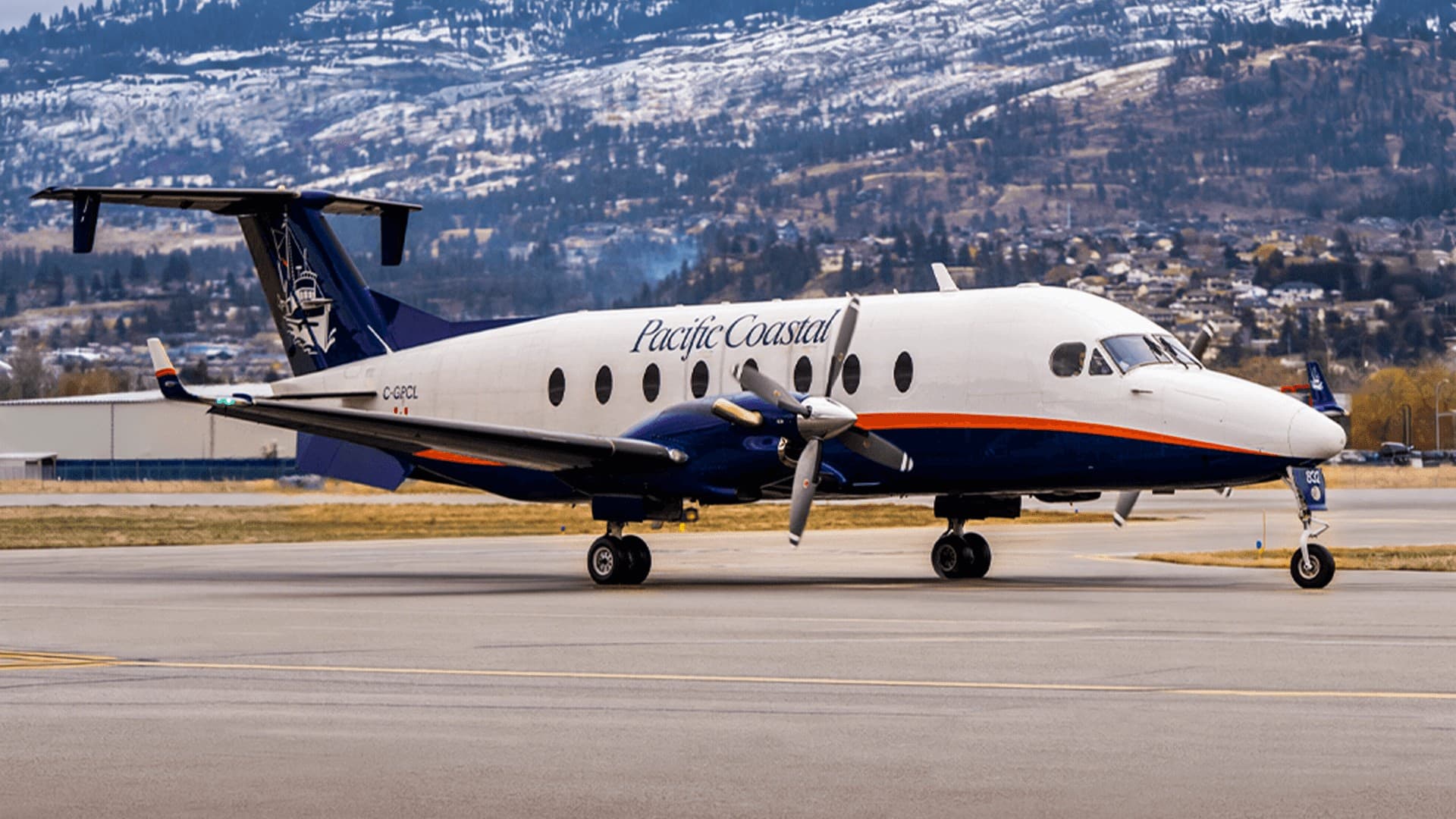
Harbour Air and Pacific Coastal Airlines announced an acquisition agreement on September 15, 2026, under which Harbour Air will buy Pacific Coastal and keep both brands within a new Canadian-owned regional airline group.
Together, the airlines would have 59 aircraft, serve 25 communities, and maintain up to 300 daily flights, with more than 900 employees across the two airlines.
The short version is that a much bigger slice of British Columbia’s regional flying could eventually share one loyalty offering. For points collectors, the interesting part is how Harbour Air’s Aeroplan relationship fits alongside Pacific Coastal’s Air Miles partnership and WestJet connections.
What Harbour Air Is Actually Buying
Pacific Coastal is a privately owned, Smith family airline founded in 1987 and based at the South Terminal in Vancouver (YVR). Its 19 scheduled destinations include Victoria (YYJ) and extend beyond the coast to places such as Kelowna (YLW), Cranbrook (YXC), and Prince George (YXS), bringing interior and northern communities into the Harbour Air group.
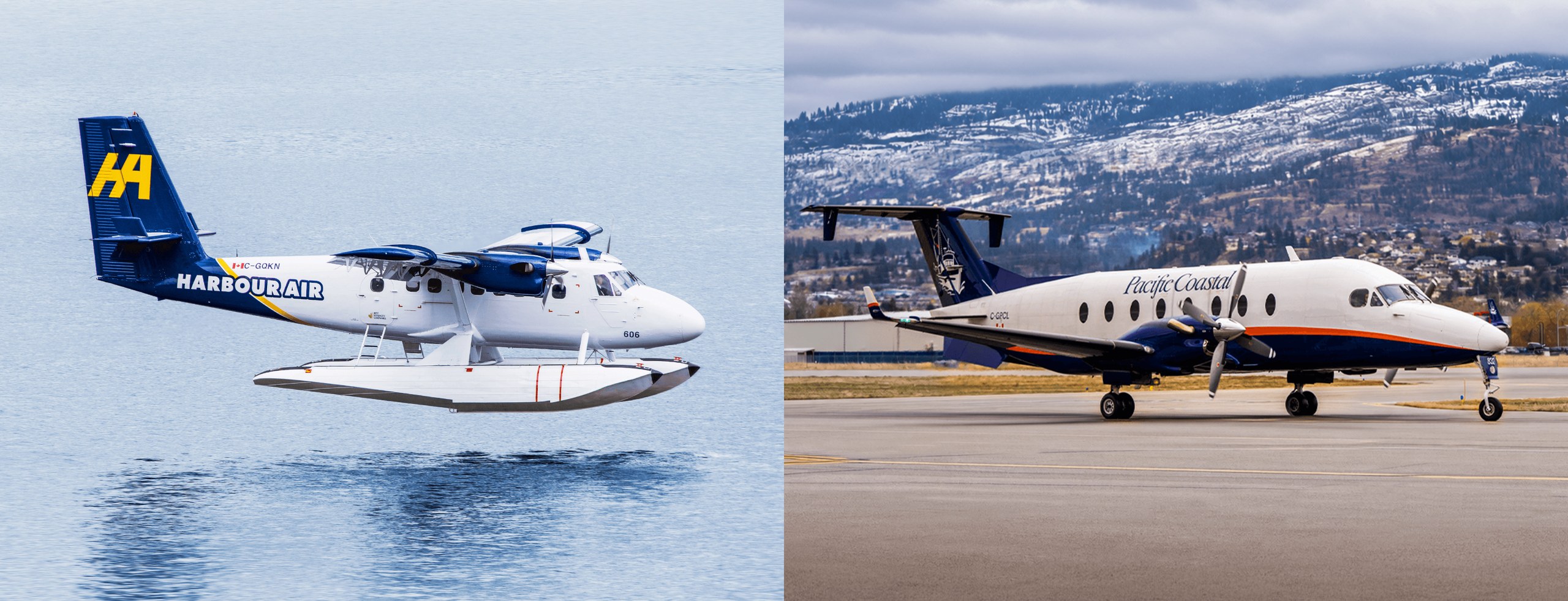
On the other side, Harbour Air brings a network centred on coastal seaplane service, with up to 200 daily flights to 13 destinations. Pacific Coastal adds roughly 20 scheduled-service turboprops, plus charter, cargo, and its Wilderness Seaplanes division. The proposed group combines those businesses while preserving their separate identities.
| Feature | Harbour Air Today | Pacific Coastal Airlines Today | Proposed Group |
|---|---|---|---|
| Founded | 1982 | 1987 | Both brands retained |
| Base | Richmond headquarters; Vancouver and Victoria hubs | YVR South Terminal | Vancouver as the key hub |
| Fleet | de Havilland Canada Beaver, Turbo Otter, and Twin Otter seaplanes, plus some wheeled aircraft | Roughly 20 scheduled-service Beechcraft 1900 and Saab 340 turboprops | 59 aircraft combined |
| Destinations | 13 | 19 scheduled destinations | 25 communities, with seven served by both airlines |
| Loyalty | Harbour Air Club and Aeroplan earning | Air Miles redemptions; prepaid QuikPass packages | One loyalty offering promised; structure unannounced |
| Airline Partner | Air Canada through Aeroplan | WestJet interline agreement | Existing partnerships unchanged at this time |
Bert van der Stege, Chief Executive Officer of Harbour Air, will lead the group. He describes the ambition as “investing together in building the leading regional airline group in Western Canada.” Further leadership details will follow, while the financial terms remain private.
Two Loyalty Programs and Two Airline Partners
The announcement promises a single loyalty offering, but doesn’t explain whether Harbour Air Club will expand, a new program will replace it, or another arrangement will emerge. That leaves a considerable gap between the stated ambition and anything a traveller can use.
Harbour Air Club is free to join, with Blue, Silver, and Gold tiers earned through Club Credits and qualifying flights. Since Harbour Air joined Aeroplan in December 2025, members can also earn 200 Aeroplan points on Flex fares, 150 on Comfort, and 100 on Value, with none on Light. Harbour Air Club’s perks include waived baggage fees and scenic tour vouchers, giving regular passengers benefits alongside the points earned on eligible fares.
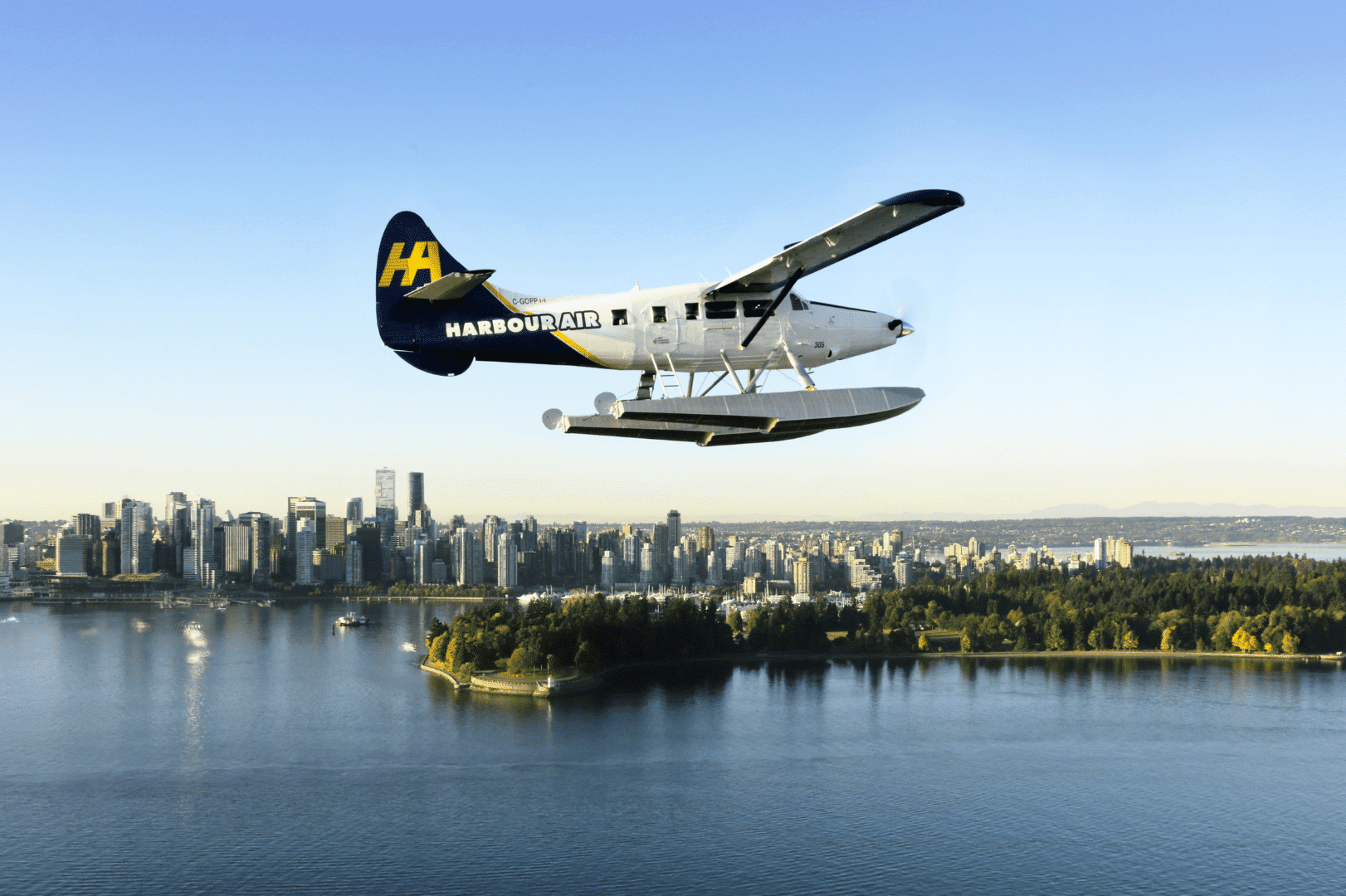
Redeeming Aeroplan points is another story. Harbour Air awards were promised for early 2026, but its website still lists them as coming soon as of September 15, 2026. There are also no reciprocal elite benefits between Aeroplan Elite Status and Harbour Air Club.
Personally, I’d love to see those redemptions go live before the year is out. Harbour Air said we’d see them sometime in 2026, we’re now into the back half of September, and a group that could soon stretch to Kelowna and Prince George gives Aeroplan a much better reason to finish the job.
Under the Aeroplan flight reward chart, partner economy awards under 500 miles start at 6,000 points, the entry price anticipated for Harbour Air redemptions. A harbour-to-harbour flight at that level would be a fun use of points, but it remains an expectation for a redemption option that hasn’t launched.
Across the proposed group, Pacific Coastal already offers Air Miles collectors a way to redeem Dream Miles for flights. Those bookings must go through the Air Miles website or call centre, rather than directly through Pacific Coastal. The airline doesn’t participate in Aeroplan.
WestJet provides the other connection. Pacific Coastal’s interline agreement allows flights on both airlines to share one itinerary and booking reference, with through-checked bags. Our explainer on how WestJet interline partnerships work covers the practical value of that arrangement for connecting travellers.
Neither Aeroplan’s expansion onto Pacific Coastal nor the long-term survival of the Air Miles and WestJet arrangements has been announced. Existing partnerships are unaffected at this time, and the two airlines continue operating independently until approval and closing.
For frequent flyers, a shared loyalty offering leaves several practical questions. Will flights on either airline count toward the same status, and will the same benefits apply on floats and wheels? The release doesn’t provide those mechanics, so there’s no basis yet for changing where you credit your flying.
Vancouver Becomes the Hub, but Nothing Changes Yet
Vancouver is set to become the group’s key hub, with the companies pointing to new connections across Canada and globally through Vancouver International Airport. Harbour Air also uses Vancouver Harbour Flight Centre (CXH) downtown, while Pacific Coastal operates from the South Terminal, so the terminal still matters when planning a connection.
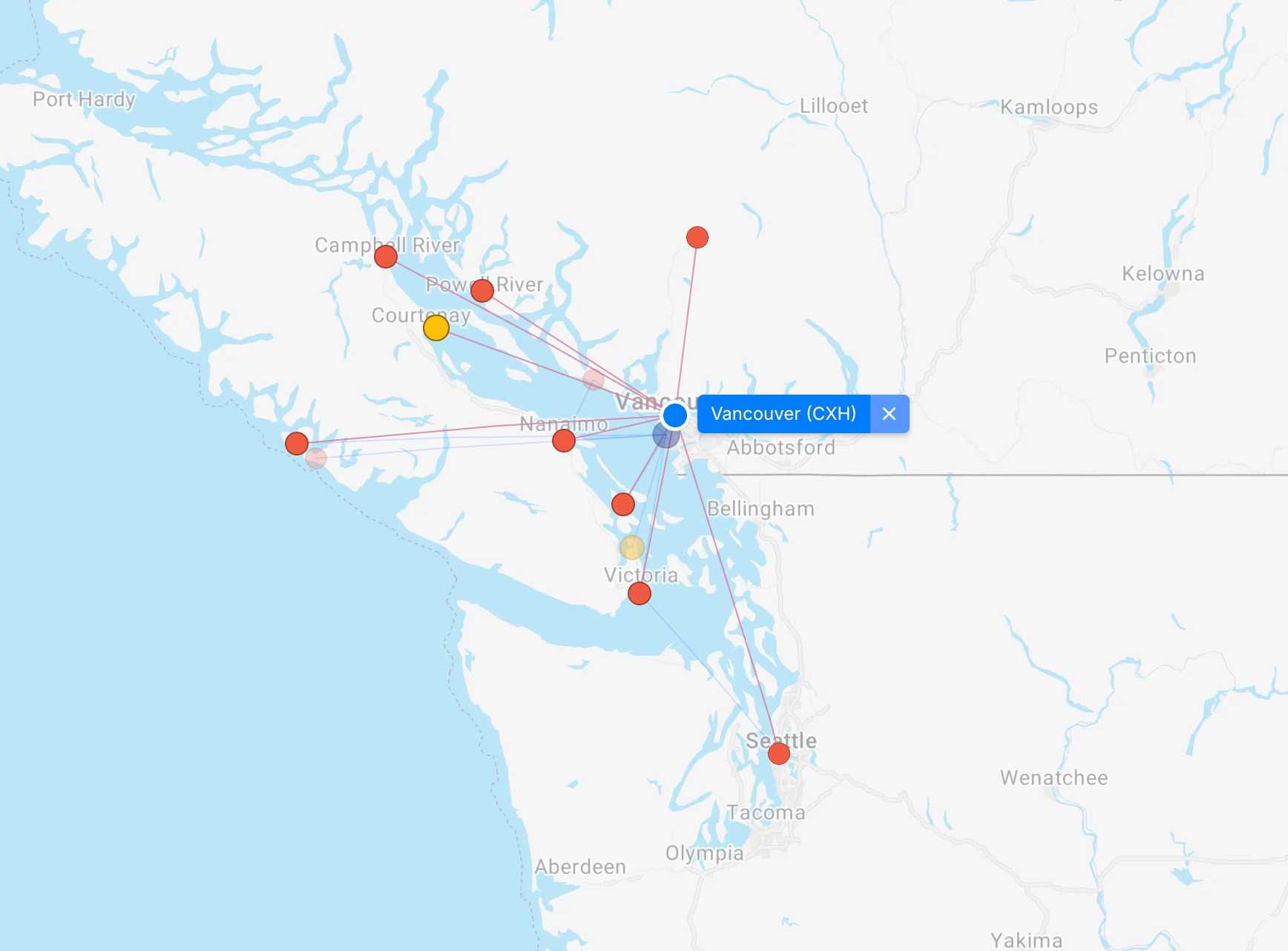
By our count from the route maps, the seven overlapping communities appear to be Vancouver, Victoria, Nanaimo (YCD), Comox (YQQ), Campbell River (YBL), Powell River (YPW), and Tofino/Ucluelet (YAZ). The companies say jointly served communities will retain both float and wheeled service.
Combining the networks could also help when coastal weather interferes. Seaplanes are more vulnerable to fog and low cloud than wheeled turboprops, giving the group a broader operational mix. There’s no announced process for moving passengers between airlines during disruptions, so I wouldn’t plan around that possibility yet.
Unlike Harbour Air’s summer route expansion, this announcement contains no specific new routes. Current routes will be maintained, with future growth evaluated after regulatory approval and integration planning.
Bookings, loyalty programs, schedules, fares, and guest service processes continue unchanged during the review. Harbour Air intends to keep Everyday Low Fares on float routes and extend a similar approach across Pacific Coastal over time, but hasn’t supplied new prices or a rollout schedule.
Regional Consolidation Under Canadian Ownership
Acquisitions are familiar territory for Harbour Air. It bought West Coast Air in 2010, Whistler Air in 2012, and Salt Spring Air in 2015, folding each into its own operation. Keeping Pacific Coastal as a separate brand makes this deal a departure from that pattern.
Regional relationships can change even when the airline doing the flying remains familiar. Pacific Coastal operated WestJet Link from 2018 until October 2024, when WestJet ended that service and moved the flying to WestJet Encore. Its continuing WestJet interline relationship is a separate arrangement.
Credit where it’s due, retaining both brands and both types of service in overlapping communities gives frequent travellers some continuity. Canadian ownership also remains intact. Whether combining corporate and support functions produces better service or lower fares is something passengers will have to judge after integration.
So let me plant a flag. With Harbour Air’s chief executive leading the group and Aeroplan already integrated into Harbour Air Club, I’d expect Aeroplan to be the likelier program to spread across the combined network. That’s my prediction, with no announced commitment to extend earning or redemptions to Pacific Coastal.
Electrification also remains part of Harbour Air’s stated plans. The airline flew an electric DHC-2 Beaver demonstrator in December 2019 and has been working toward certification since. It says the acquisition doesn’t change that commitment, although the announcement supplies no new certification milestone.
Regulatory approval remains a substantial unfinished step, including federal competition and transportation reviews. No closing date or timeframe has been confirmed, so neither the loyalty promise nor the low-fare ambition comes with a dependable implementation date.
Conclusion
For now, travellers don’t need to do anything. Keep existing bookings and use the loyalty programs as they work today, including remembering that Harbour Air’s Aeroplan redemptions remain unavailable.
Watch for the regulatory decision and the details of the shared loyalty offering. Those will tell us whether this larger network brings new points options and what happens to the partnerships travellers already use.
A bigger airline group gives British Columbia more flying under one owner. Its value to a points collector will come down to which of those flights their points can actually book.





Member Discussion