


The most prominent US credit card points program, with all transfer partners at a one-to-one ratio. Best known for its World of Hyatt transfer partnership, making it a top choice for hotel-focused travelers.
| Program | Ratio | Speed |
|---|---|---|
| Star Alliance | ||
| Aeroplan+25% | 1:1 | Almost instant |
| Singapore Airlines KrisFlyer | 1:1 | 1-2 days |
| United MileagePlus | 1:1 | Almost instant |
| Oneworld | ||
| British Airways Avios+20% | 1:1 | Almost instant |
| Iberia Club+20% | 1:1 | Almost instant |
| SkyTeam | ||
| Air France KLM Flying Blue | 1:1 | 1 hour |
| Virgin Atlantic Flying Club | 1:1 | Almost instant |
| Other Airlines | ||
| Aer Lingus AerClub+20% | 1:1 | Almost instant |
| JetBlue TrueBlue | 1:1 | Almost instant |
| Southwest Rapid Rewards | 1:1 | Almost instant |
| Hotel Programs | ||
| IHG One Rewards+70% | 1:1 | 1 day |
| Marriott Bonvoy | 1:1 | 2 days |
| World of Hyatt | 1:1 | Almost instant |
| Wyndham Rewards | 1:1 | Next business day |
Our Valuation
1.7 cents per point(USD)
2.3 cents per point (CAD)
Best known for its 1:1 World of Hyatt transfer – the highest-value hotel redemption available from any US credit card program. The Sapphire Reserve's 1.5 cents per point portal floor provides a strong baseline when transfers don't make sense.
Last updated: February 6, 2026
Chase Ultimate Rewards is arguably one of the best transferrable points currencies around. Chase offers generous welcome bonuses on their Ultimate Rewards credit cards, and there are quite a few options for redeeming Ultimate Rewards points for top value.
Chase offers some of the highest welcome bonuses on credit cards across all major banks, especially with their business credit cards. Currently, five personal and three business credit cards comprise the Chase Ultimate Rewards lineup.
The Chase Sapphire Preferred usually offers welcome bonuses that hover around 60,000 points, but historically, it has gone as high as 100,000 points. The card commands a modest $95 annual fee.
The Chase Sapphire Reserve, the more luxe version of the Sapphire card, commands a hefty $550 annual fee, with its welcome bonus reaching as high as 80,000 points in recent years.
The card’s high annual fee is justified by the other perks associated with the card, such as unlimited airport lounge access and an annual $300 statement credit towards travel purchases. With these benefits, the Chase Sapphire Reserve is often seen as a competitor to the Platinum Card by American Express.

Chase also has the Freedom lineup of personal credit cards. Despite being advertised as cash back cards, these cards do in fact earn Chase Ultimate Rewards points.
Both the Chase Freedom Unlimited and Chase Freedom Flex cards are very similar, and they typically come with 20,000 Ultimate Rewards points as a welcome bonus. As an added perk, they also come with an elevated earn bonus of up to 5% on specific categories, such as groceries.
The Chase Freedom Student card, meanwhile, comes with a much smaller welcome bonus of 5,000 points. It also comes with an additional 2,000 points every anniversary year your card is in good standing for the first five years.
None of these Freedom cards come with an annual fee, but they tack on a foreign conversion fee for transactions not settled in US dollars, which makes them disadvantageous to use for spending abroad.
Chase’s most popular business card is the Chase Ink Business Preferred, which comes with a generous welcome bonus of 100,000 points after spending $15,000 in the first three months. Its annual fee is only $95.
Despite their names, Chase Ink Business Unlimited and Chase Ink Business Cash also earn Ultimate Rewards points. Both cards have offered welcome bonuses of up to 90,000 points (most recently from August 2024 to November 2025), and currently offer 75,000 points, which is still generous for no-annual-fee cards.
Similar to the Freedom lineup, however, you’ll be charged a foreign exchange fee on all non-USD purchases.
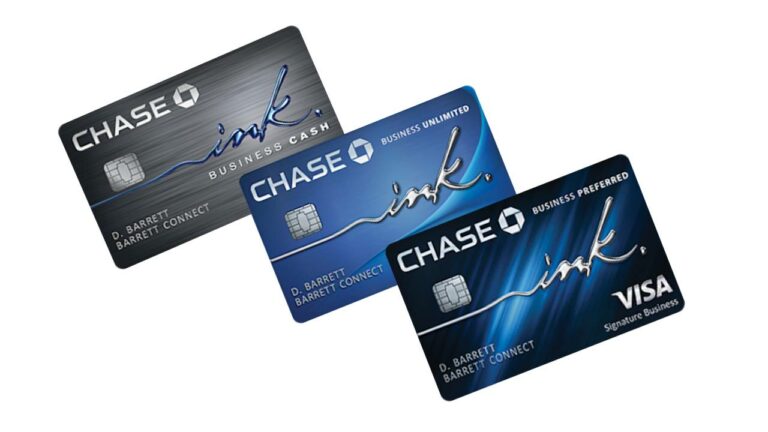
There’s a fourth card in the Chase Ink Business lineup, the Chase Ink Business Premier card, but it’s actually a true cash back card, and you won’t be earning Chase Ultimate Rewards points with it.
It’s important to note that when applying for Chase credit cards, you must abide by the “5/24 rule”. The rule stipulates that you must have opened only five new personal credit cards in the past 24 months at most across all US banks. If you exceed the limit, you’ll automatically be declined.
The amount of points you’ll earn depends on the card you use and the merchant classification. There are also promotions that come around from time to time, such as 5x points on qualifying Lyft rides available on some cards.
The earning rates on Chase credit cards that earn Ultimate Rewards points are as follows:
To see if you are eligible to refer, simply enter your last name, zip code, and last four digits of your credit card number at Chase’s Refer-A-Friend page.
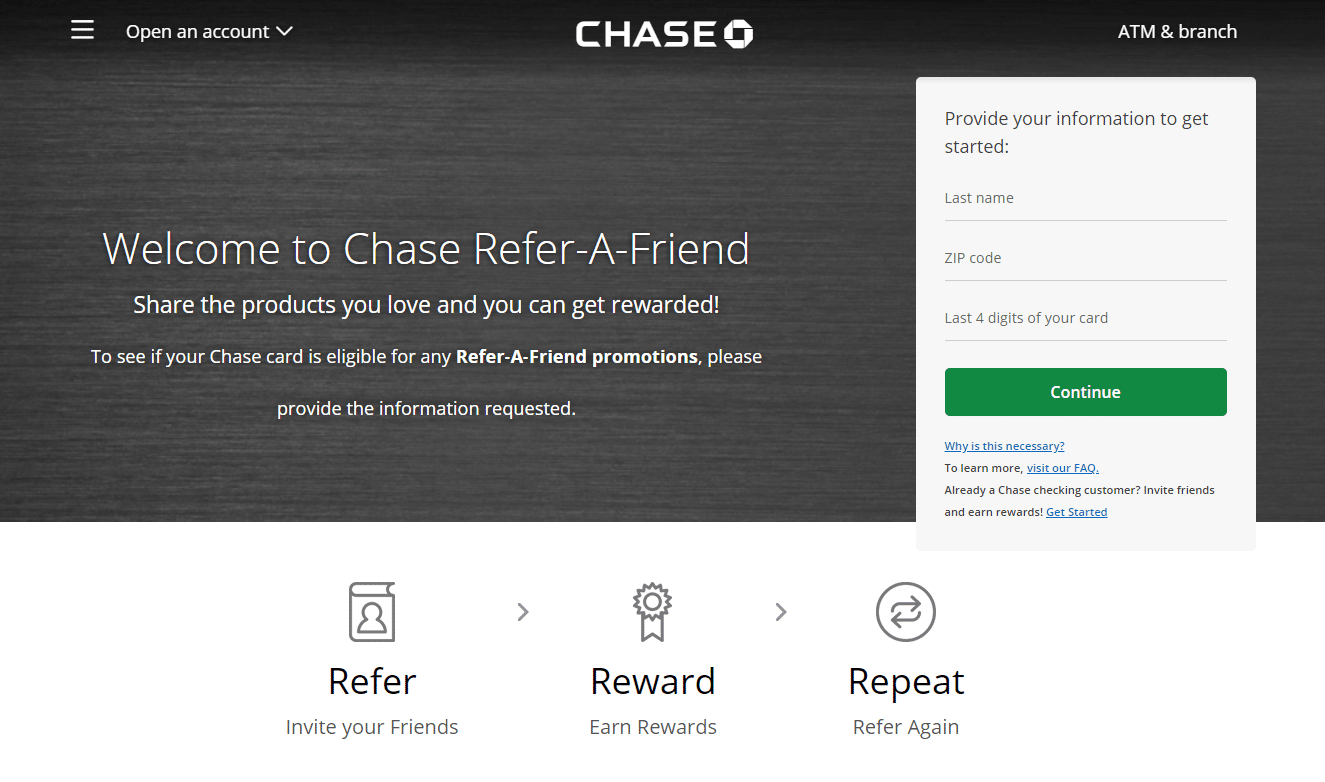
Chase Freedom cardholders can earn 10,000 points per referral up to a maximum of 50,000 points, while Chase Sapphire cardholders can earn 15,000 points per referral up to a maximum of 75,000 points.
On the other hand, Chase Ink Business cardholders can earn 20,000 points per referral up to a maximum of 100,000 points.
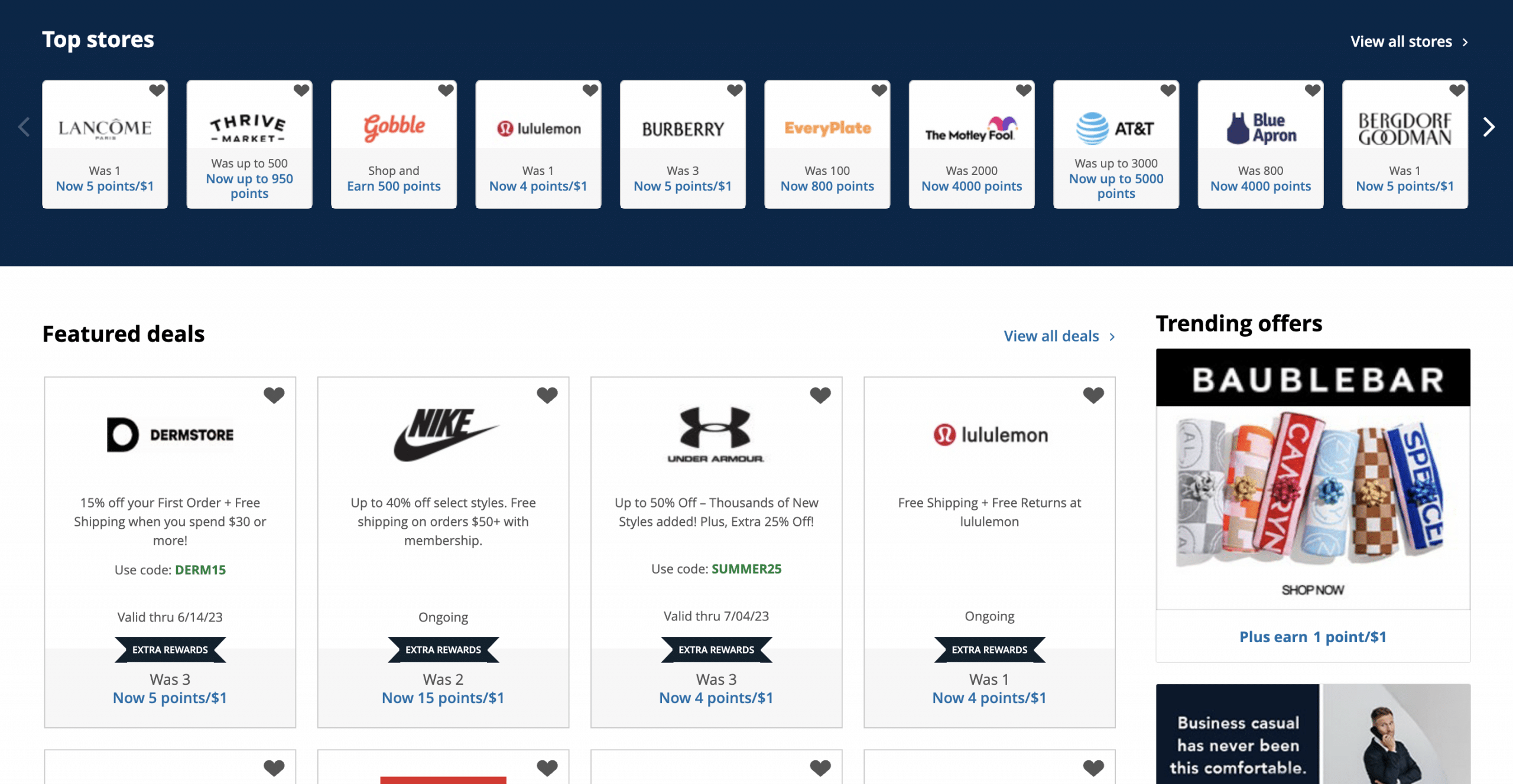
In order to earn points on online purchases, you’ll have to log onto your Chase account, navigate to the "Shop through Chase" portal, and choose the card you’d like to bank your points into.
On the portal, you’ll see which stores are available and how many extra points you’ll earn just by shopping through Chase’s dedicated affiliate link.

Some of the best options include transferring points to airline or hotel loyalty programs, using the points to book travel through Chase’s travel portal, and redeeming points as statement credits.
At a rate of 1:1, you can transfer Chase Ultimate Rewards points to the following loyalty programs:
Airlines
In terms of the best options for transferring points, World of Hyatt tends to be Chase’s most popular transfer partner, because World of Hyatt points aren’t as easy to earn as some of the others on Chase’s transfer partner list.
That being said, if you have a specific business class or First Class flight already in mind, then transferring your points to one of the airline programs could be your best choice, especially if you line up your transfer with a promotional bonus.
In addition, there are redemptions only possible with certain frequent flyer programs and redemptions that are considered “sweet spots”. Some examples include:

When you’re deciding which program to transfer your Chase Ultimate Rewards points to, you should also consider how easy or difficult it is to earn those points through other avenues, such as credit card welcome bonuses or by transferring from other banks’ programs.
Chase points can be redeemed for 1 cent per point, but there are a couple of exceptions.
If you have the Chase Sapphire Preferred or the Chase Ink Business Preferred credit cards, you’ll get a slightly higher value of 1.25 cents per point.
Meanwhile, if you hold the Chase Sapphire Reserve card, you can redeem your points at the highest rate of 1.5 cents per point.
This means that if you redeem 60,000 points, they’ll be worth $600 if you've banked the points with any of the following cards:
If you hold multiple cards that earn Ultimate Rewards points, you can easily and instantly transfer your points from one card to another to take advantage of a higher redemption value.
However, if you don’t have one of the three Chase cards that gives a higher value per point, it may make sense to wait until you’re able to sign up for one of them before redeeming your points since Chase Ultimate Reward points don’t expire as long as you keep one of your credit card accounts open. Don’t hold them too long though – devaluations are a sad reality of the game.
Also, it’s always sensible to compare prices on Chase’s travel portal with other travel booking options, such as airline award redemptions and other online travel agencies.
Certainly, there are situations where redeeming Chase Ultimate Rewards points through the travel portal makes more sense than transferring to a loyalty partner and redeeming there.
One example is buying tickets, especially last-minute ones, that would otherwise not be available through an airline program. While you're not getting the best value off your Ultimate Rewards points, you could redeem them at a fair value to offset your purchase and lessen your out-of-pocket costs.

The better but slightly more complicated method is “Pay Yourself Back”, which allows you to offset previous purchases you’ve made in specific categories within the past 90 days.
Similar to redeeming points through Chase’s travel portal, the redemption rate you get for your points depends on which Chase credit card you have. The redemption rate generally ranges from 1 cent per point to 1.25 cents per point for most cards.
Rotating categories include gas, grocery, internet, cable, phone, shipping, dinning, and charity expenses. You can get a higher redemption 1.5 cents per point on charity contributions made with a Chase Sapphire Reserve Card.
Keep in mind that you can certainly derive better value out of your Chase Ultimate Rewards points by transferring them to travel partners, or booking trips on your own through Chase’s travel portal. However, if you don't have any travel plans or if you’re wanting to redeem your points quickly, redeeming points for 1.25–1.5 cents per point through Pay Yourself Back isn’t a terrible option.
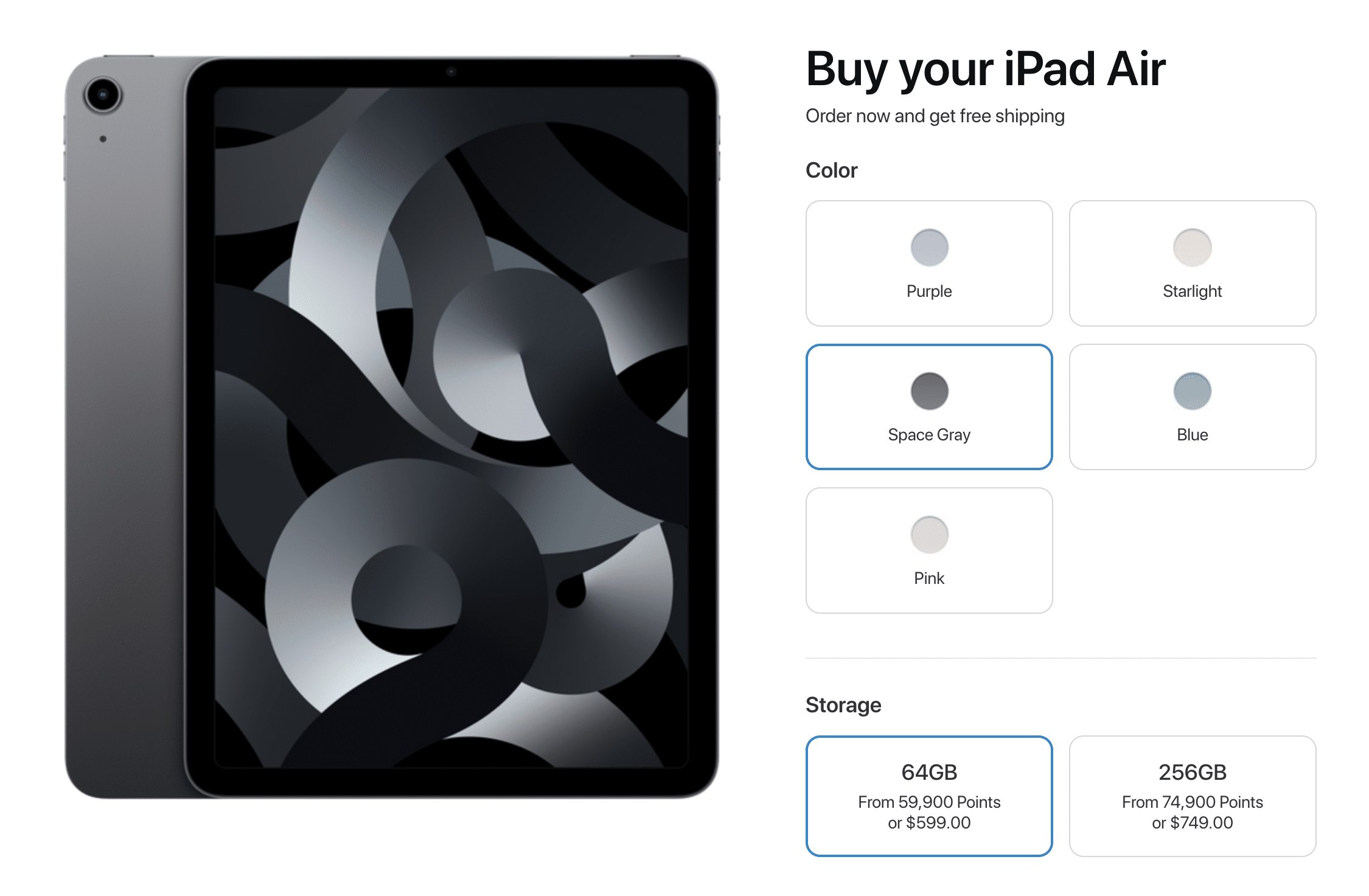
Proving their flexibility further, Ultimate Rewards points can be redeemed as rebates on PayPal purchases. However, redeeming this way yields a value of 0.8 cent per point, which is clearly subpar compared to the 1 cent per point that you may get from the cash back option.
Lastly, you can also redeem Chase Ultimate Rewards points for gift cards. Most gift cards can be redeemed at 1 cent per point, with some gift cards offering better promotional pricing periodically.
Points earned can be redeemed through a number of options, with the most lucrative of them being the ability to transfer to a long list of airline and hotel partners. Notably, the list includes World of Hyatt, which doesn’t participate in many credit card transfer partnerships.
You can also redeem Ultimate Rewards points flexibly through the Chase travel portal, or if you don’t have immediate travel plans, you can redeem them as statement credits or even cash.
You should surely prioritize credit cards that earn Chase Ultimate Rewards points if you're starting in the US market or if you're planning to do so.
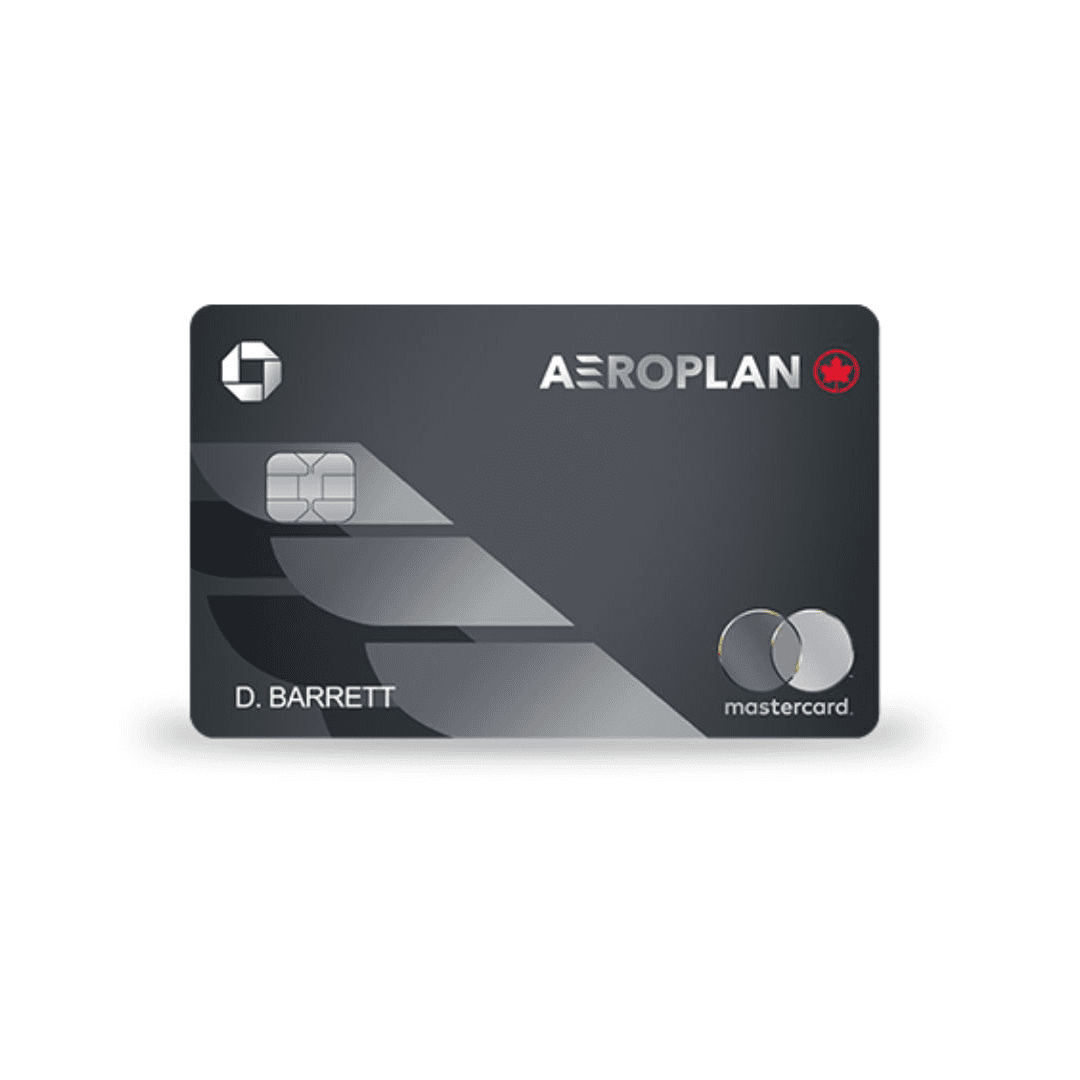
First-year value
$1,228
Annual fee: $95
• Earn 60,000 points upon spending $3,000 in the first 3 months
Earning rates
Key perks
Annual fee: $95
• Earn 60,000 points upon spending $3,000 in the first 3 months
Earning rates
Key perks