Air New Zealand's Skynest Economy Bunk Beds Open for Booking May 18

.jpeg&w=3840&q=75)
A Proper Bed in Economy
Air New Zealand has confirmed launch dates for Skynest, its long-teased economy bunk bed product. Bookings open on May 18, 2026.
Travel starts in November 2026, with the first pods flying on the airline's 17-hour Auckland–New York route aboard the Boeing 787-9. A four-hour session in a full lie-flat pod starts at $495 (USD), which works out to roughly $125 per hour of sleep.
It'll be the first time a commercial airline has sold a dedicated economy sleep product, and after six years of concept renders, it's finally real.
How the Skynest Works
The new cabin sits between premium economy and economy, replacing two center rows of standard seats. Air New Zealand is installing six full-length pods in a V-shaped arrangement, stacked three high on each side.

Each pod is 80 inches long and 23 inches wide, with a proper mattress, pillow, sheets, and duvet. You also get a privacy curtain, reading light, USB outlet, ventilation control, and a small storage pocket.
Air New Zealand is bundling a "Nestcessities" amenity kit into every booking, including an eye mask, socks, earplugs, a dental kit, and Aotea skincare from New Zealand.
Sessions run in four-hour blocks, with a 30-minute turnaround between users so crew can change the linens. The 787-9 operating Auckland–New York will offer two sessions per flight initially, with room to add a third on longer routings.
One catch: you can't book a Skynest pod for takeoff or landing, and access is restricted to able-bodied passengers aged 15 and above. You'll still need to hold your original economy seat for the rest of the flight.
The Value Question
At $495 (USD) per session, Skynest sits in an awkward middle ground. It's a real add-on cost for economy passengers, but it's still a fraction of what a long-haul business class ticket to New Zealand typically runs, which routinely climbs into five figures on paid fares.
If a Skynest booking saves you from arriving wrecked after 17 hours upright, roughly $670 (CAD) is defensible math. That's assuming you can actually fall asleep in a stranger's shared pod, which is its own question.
There's also a scarcity problem. With only six pods and two sessions per flight, the entire aircraft has 12 Skynest reservations to sell on a plane carrying over 200 economy passengers. These will sell out fast, especially on peak-season Auckland departures.
What I'm Not Sure About
It's hard to form a real opinion on Skynest until I've actually slept in one, and I'll reserve final judgment until I do. A few things do stand out from the press images, though.
The pods look narrow. 23 inches is tight for anyone who sleeps on their back with arms at their side, and genuinely snug for side sleepers. A standard twin mattress is 38 inches wide, for comparison.
Stacking pods three high is the other piece I'm skeptical about. I can't quite picture an older passenger climbing a ladder to the top bunk on a moving aircraft, and the safety questions around that third level are worth thinking through. Turbulence on a 17-hour ultra long-haul flight isn't a theoretical risk.
Air New Zealand has pre-empted some of this by restricting access to able-bodied passengers aged 15 and above, which tells me they're aware of the accessibility and safety concerns. Whether that restriction is enough in practice is something we'll only know once real passengers start booking and reviewing.
How It Fits Into the Wider Cabin Refresh
Skynest isn't the only new thing about the 787-9. Air New Zealand has been rolling out a full cabin refresh over the past year, and the same aircraft carrying the pods also features a new Business Premier Luxe suite, redesigned premium economy, and the existing Economy Skycouch row.
.jpeg)
Business Premier Luxe is the airline's new top cabin, with four enclosed suites at the front of the 787-9. It's a direct response to Qantas and Singapore Airlines, both of which fly proper business class suites into Auckland.
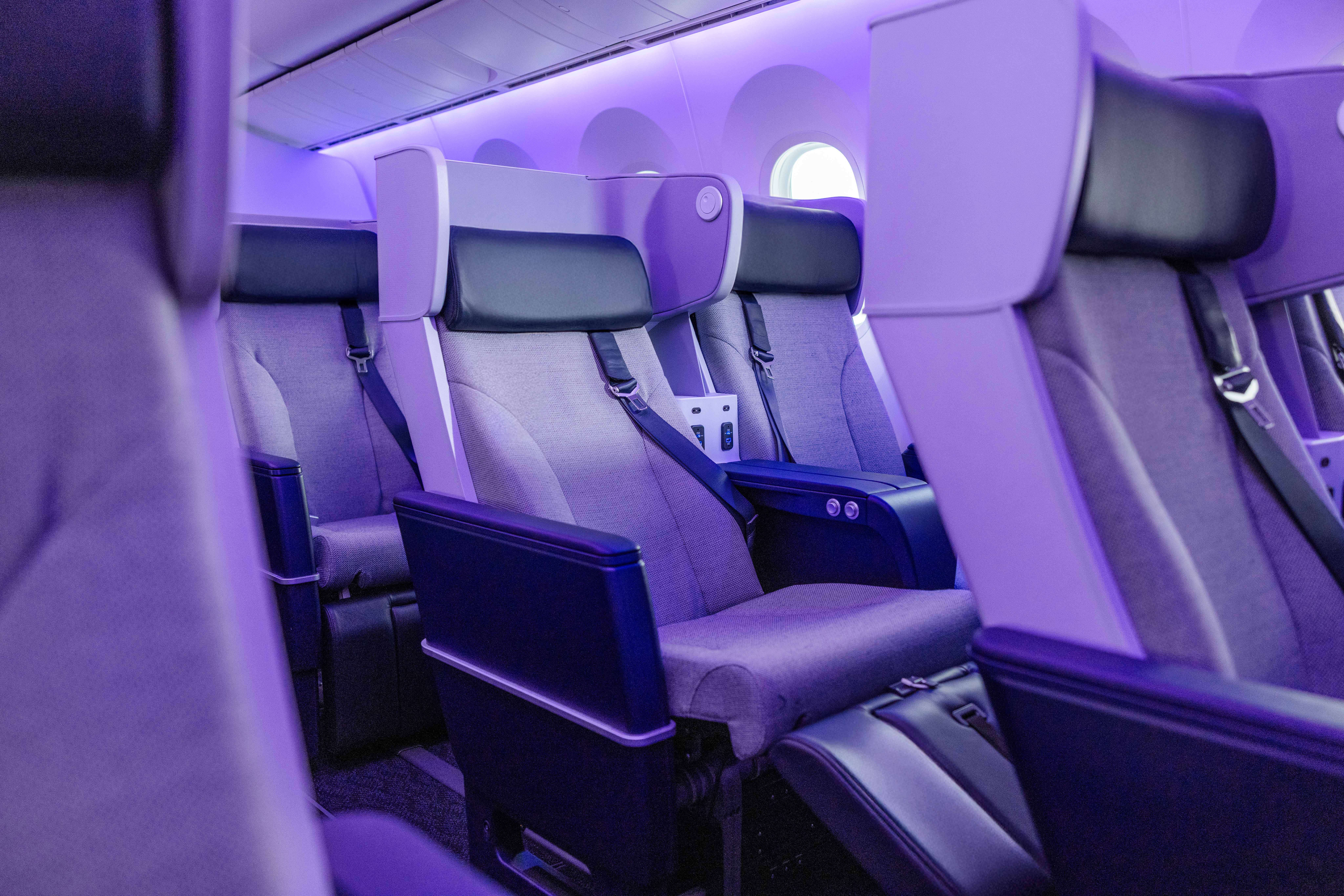
The new premium economy seat comes with larger screens, more storage, and a cleaner finish. For Canadians flying the upcoming Auckland–Vancouver route, it's the cabin I'd be watching most closely. We've written before about why Air Canada Premium Economy is a great deal, and Air New Zealand's version is arguably a step above.
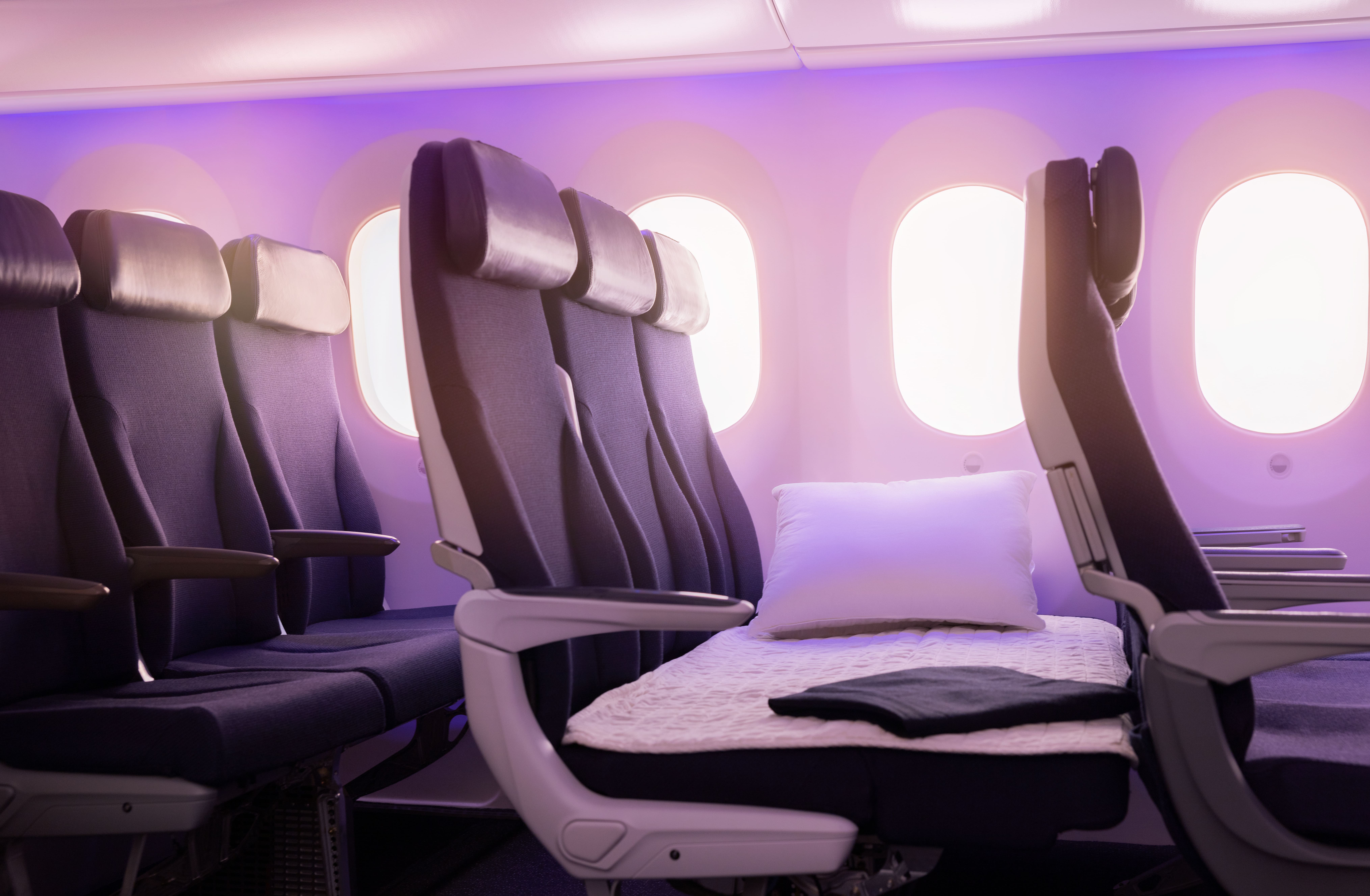
If you're traveling as a couple or with a small child, the Economy Skycouch still exists, and it pairs oddly well with the Skynest launch. A Skycouch row is cheaper than two Skynest sessions and gives you the whole flight to sprawl out, not a four-hour window.
Even base economy gets a minor upgrade, with larger inflight entertainment screens on the refreshed 787-9s. It's not revolutionary, but it's the right direction for a carrier trying to make 17-hour sectors more tolerable.
Conclusion
If I were flying Auckland–New York in economy this November, I'd be tempted to book a Skynest session just to test the product for myself. Four hours of flat sleep on a 17-hour redeye is the difference between arriving functional and arriving ruined, and $495 (USD) is cheaper than almost any upgrade I can think of.
What I wouldn't do is pay for Skynest if it eventually expands to shorter routes. The math only works on true ultra long-haul flights where you're otherwise stuck upright for 15 or more hours. If Air New Zealand brings Skynest to Auckland–Vancouver or Auckland–Los Angeles down the line, skip it and put the money toward premium economy instead.
The bigger story is what happens if this works. Every airline flying ultra long-haul has been watching Skynest renders for years, waiting to see if anyone would actually pay. A successful launch could reshape economy long-haul pricing across the industry. A flop, and it joins the graveyard of clever cabin concepts that never scaled.
My bet? It sells out for the first year. Whether the narrow pods and three-story stacking hold up to real-world reviews is a different question.

Jason thrives on connecting with the heart of a destination, seeking out experiences that go beyond the guidebooks.

First-year value
$336
Monthly fee: $15.99
• Earn 1,250 points per month upon spending $750 per month for 12 months
Member Discussion