
Why Doesn't WestJet Have a Refundable Economy Fare?

In This Post
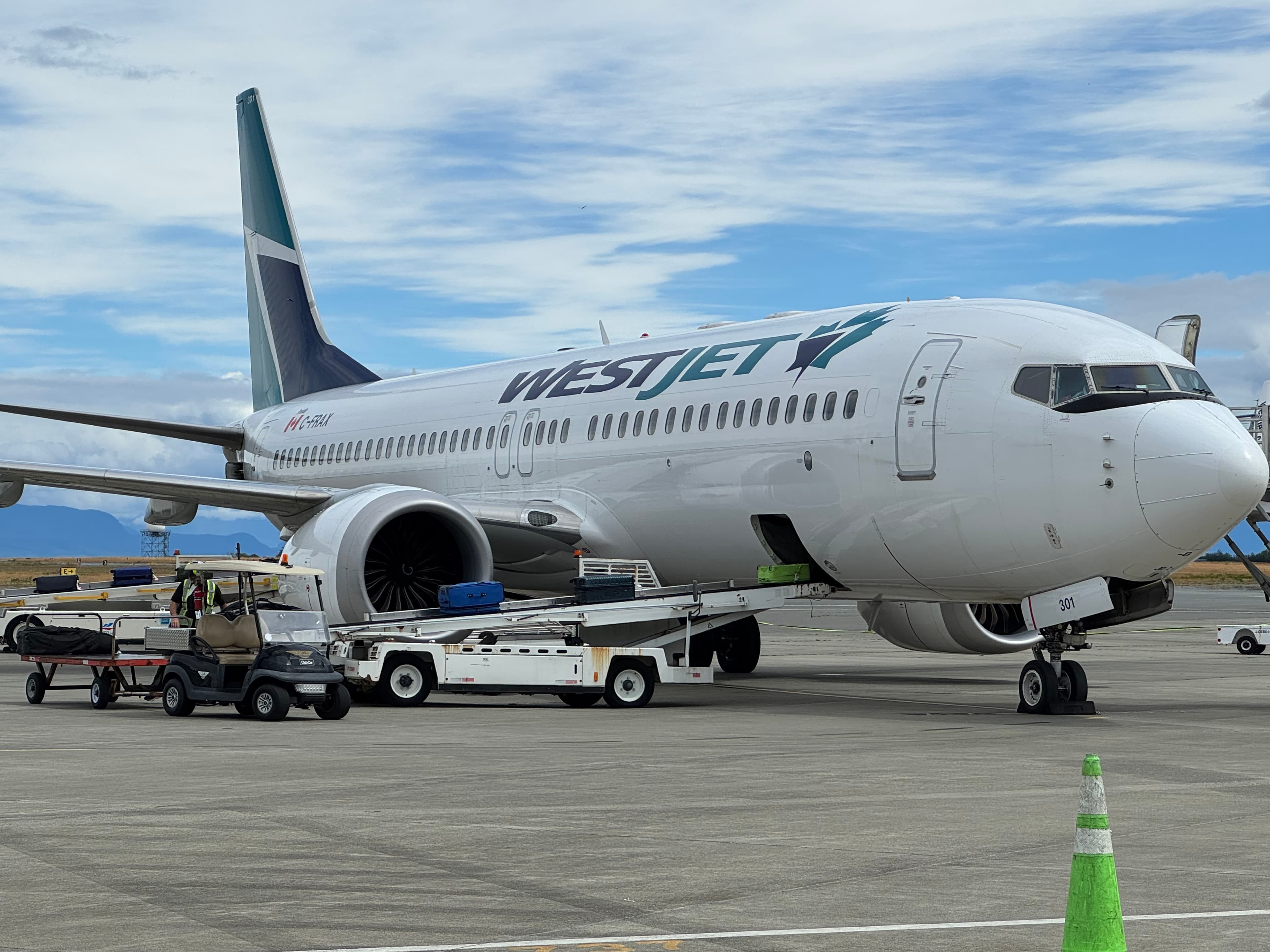
With the dust more or less settled on the recent WestJet strike, I'd like to shine a light on a quirk of WestJet's fare structure that I think warrants more attention, especially since many Canadians likely found themselves in this situation.
In anticipation of the strike, the airline offered "flexible change/cancel options" to anyone who was uncertain about whether their flights would operate. With these options, you could change or cancel your flight at no cost if it was set to fly within a specified window. On the surface, that sounds reassuring, but once you dig into WestJet's fare rules, the picture becomes a bit murkier.
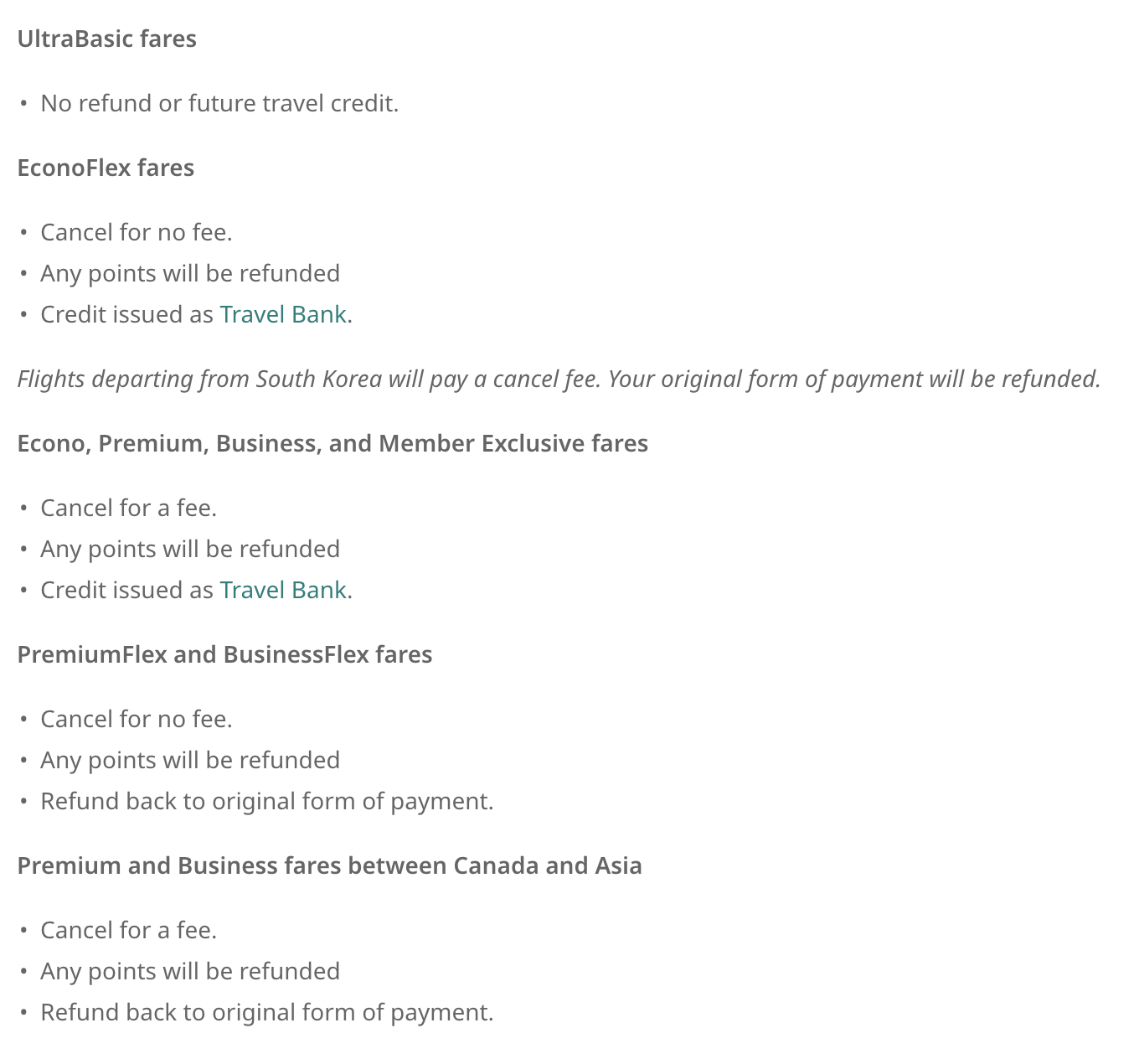
In most cases, cancelling your flight on your own volition would only get you a refund to a WestJet Travel Bank credit – not your original form of payment. However, if you waited for WestJet to cancel your flight, then you'd be eligible for a refund to your original form of payment (if you couldn't be rebooked within 48 hours).
This got me thinking about a broader gap in WestJet's lineup. Unlike Air Canada and Porter Airlines, WestJet doesn't offer a single economy fare that refunds 100% of your money back to your original form of payment if you choose to cancel it yourself.
In my opinion, this is a meaningful omission for Canada's second largest carrier. Let's break it down.
Why Doesn't WestJet Have a Fully Refundable Economy Fare?
If you're not familiar with WestJet's fares, you can choose from three options for flights in the economy cabin booked with cash: UltraBasic, Econo, and EconoFlex. As the name might suggest, the airline's most flexible economy fare is EconoFlex, which is marketed as a refundable option. Technically, that's true – you can cancel and get your money back.
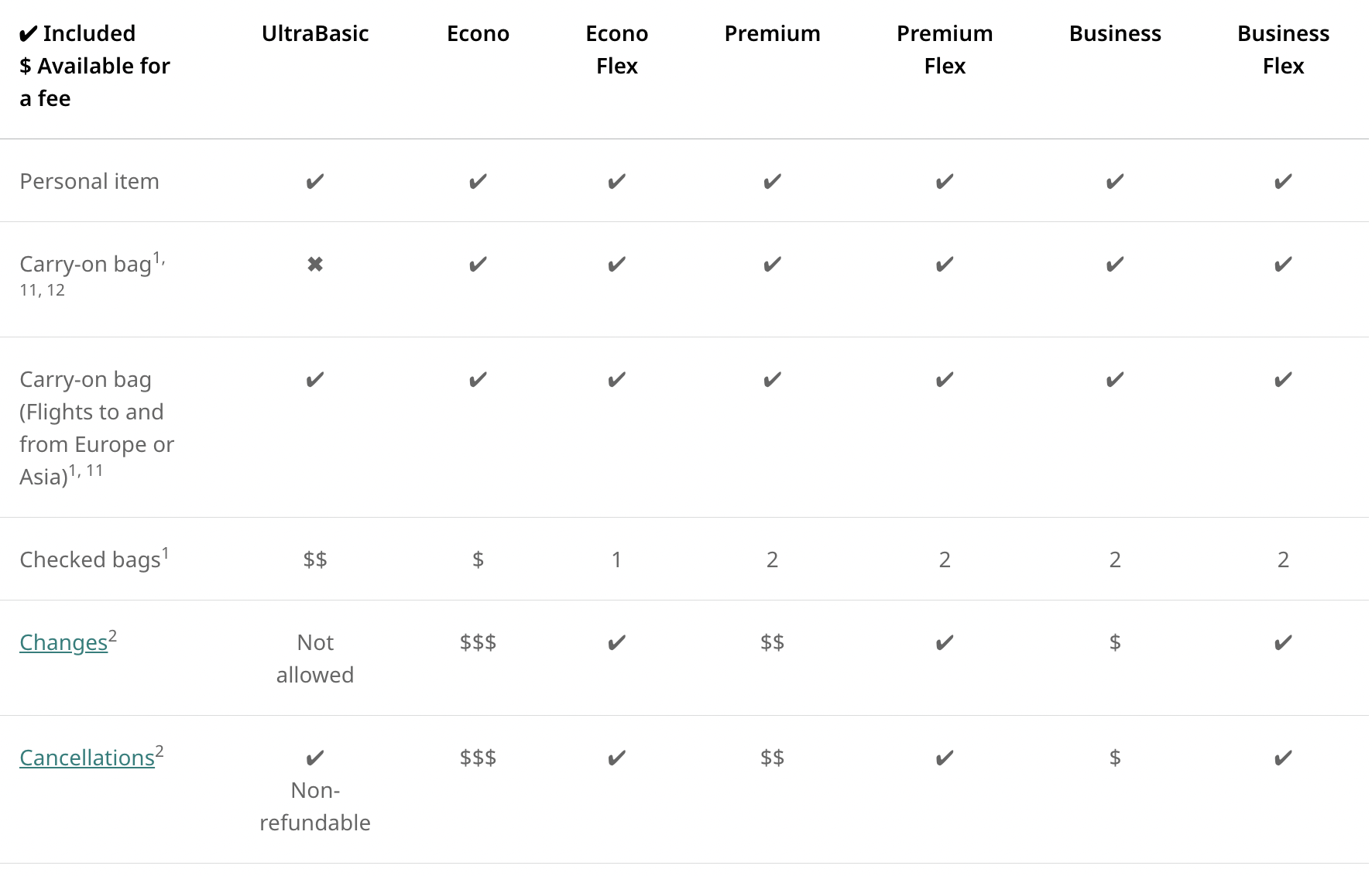
The catch is that the refund goes to your WestJet Travel Bank, not back to your credit card. In other words, you're getting a credit to use on a future WestJet booking rather than actual cash back in your pocket (well, on your credit card).
For WestJet loyalists, that's a distinction without much of a difference, because if you fly WestJet regularly, a Travel Bank credit is more or less as good as cash.
But it's worth noting that this only holds true if your future travel plans align with WestJet's network and schedule. The moment you need to book with another airline, that credit becomes a lot less useful, especially if you're an infrequent traveller with WestJet.
To make matters worse, you have to do a fair bit of digging on WestJet's website to find out exactly how you'll be credited if you cancel your flight.
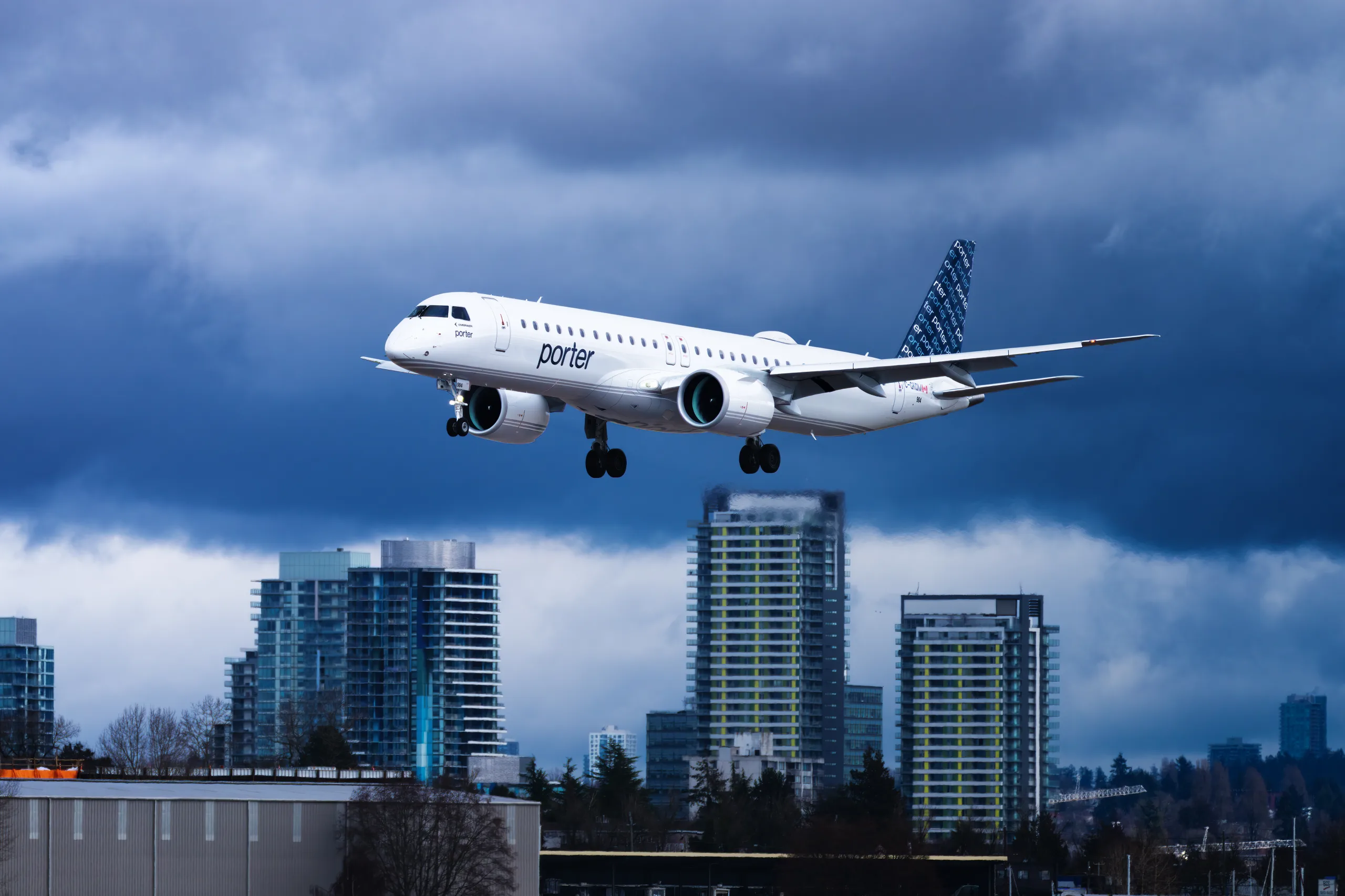
Air Canada and Porter Airlines offer fully refundable economy fares
Air Canada and Porter Airlines both offer economy fares that refund 100% of your money to your original form of payment. If you cancel, the cash goes right back onto the credit card you used to book.
With a true refund, you're free to walk away and spend that money however you like – including booking a flight on a competitor.
From a practical perspective, this is the flexibility most people assume they're getting when they buy a "refundable" or a "flexible" fare. You're paying a premium for the peace of mind that you can back out entirely with no strings attached.
WestJet's EconoFlex doesn't quite give you that. Effectively, once you've purchased any WestJet economy fare, you're basically locked into the WestJet ecosystem whether you like it or not in the vast majority of cases.
Again, the only main exception I can see here is if you're a devoted WestJet flyer who books with them exclusively. In that case, the Travel Bank distinction is largely academic, but it's still worth understanding.
Ultra-low cost carrier Flair Airlines also doesn't offer a refundable economy fare
Here's where the comparison gets interesting. Flair Airlines, Canada's lone remaining ultra-low-cost carrier, also offers flexible fares that revert to a credit only rather than a refund to your original form of payment.
In other words, WestJet's flexible economy fare behaves the same way as Flair's. Both give you a credit for future travel with the airline (or at least booked through the airline) rather than your money back.
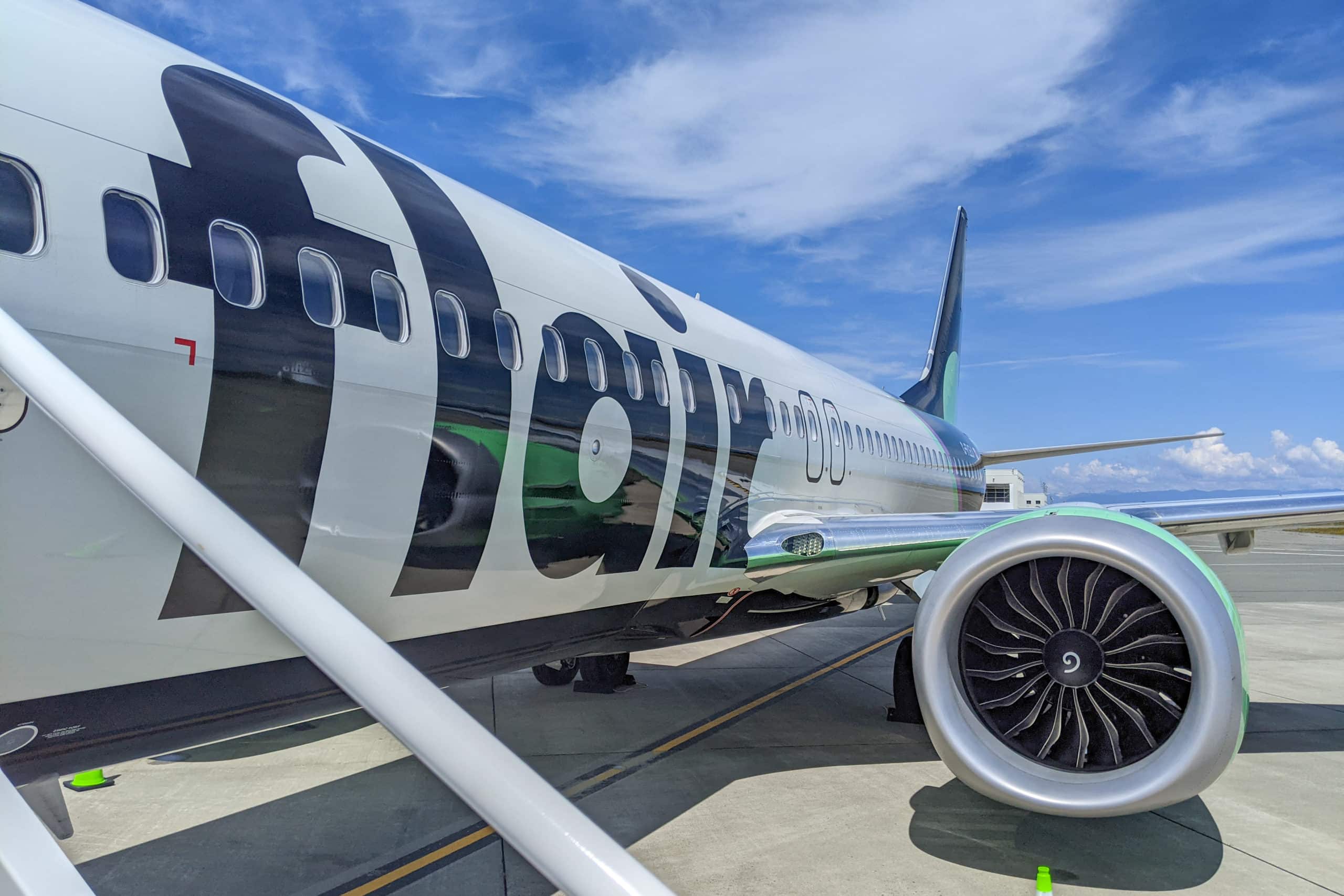
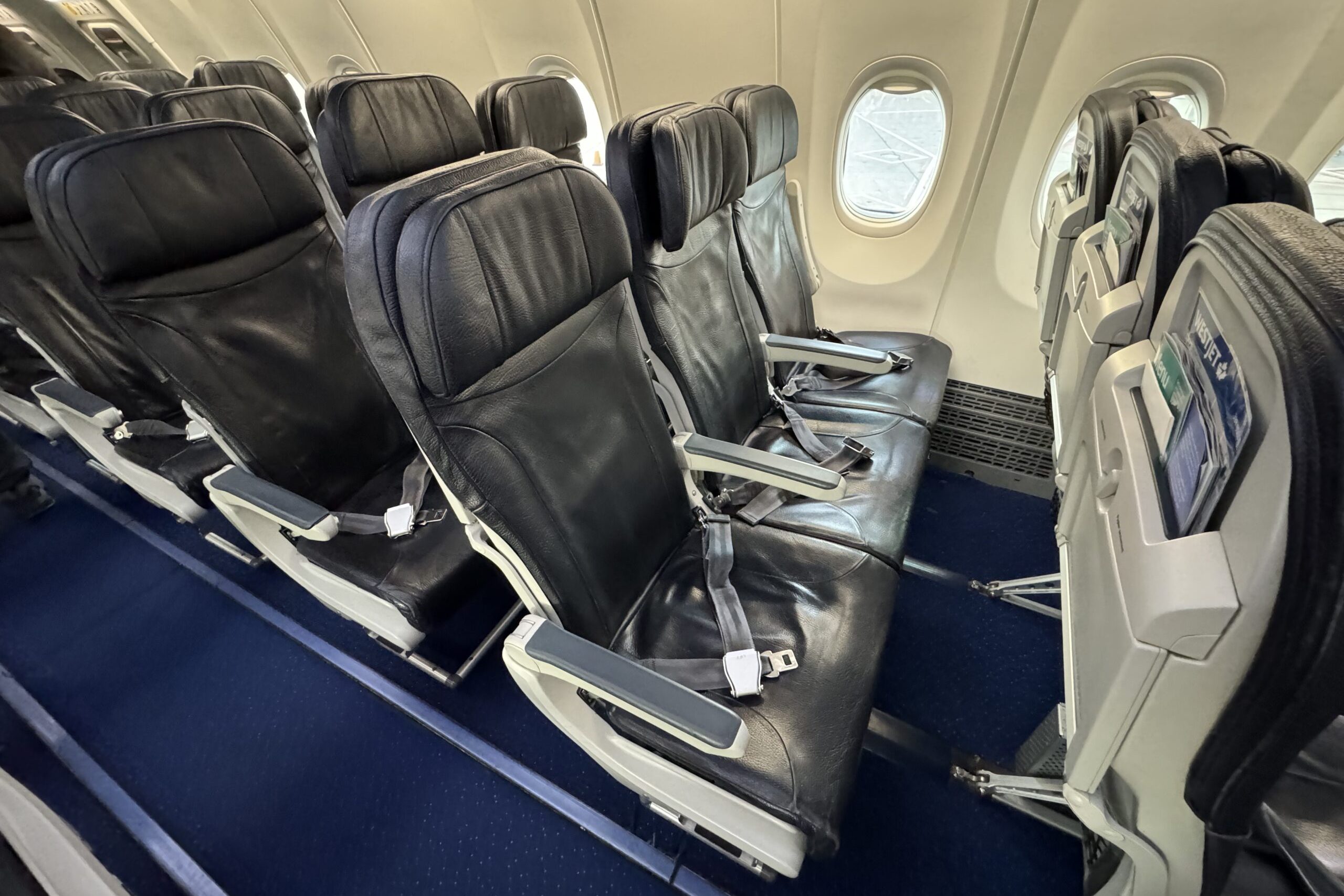
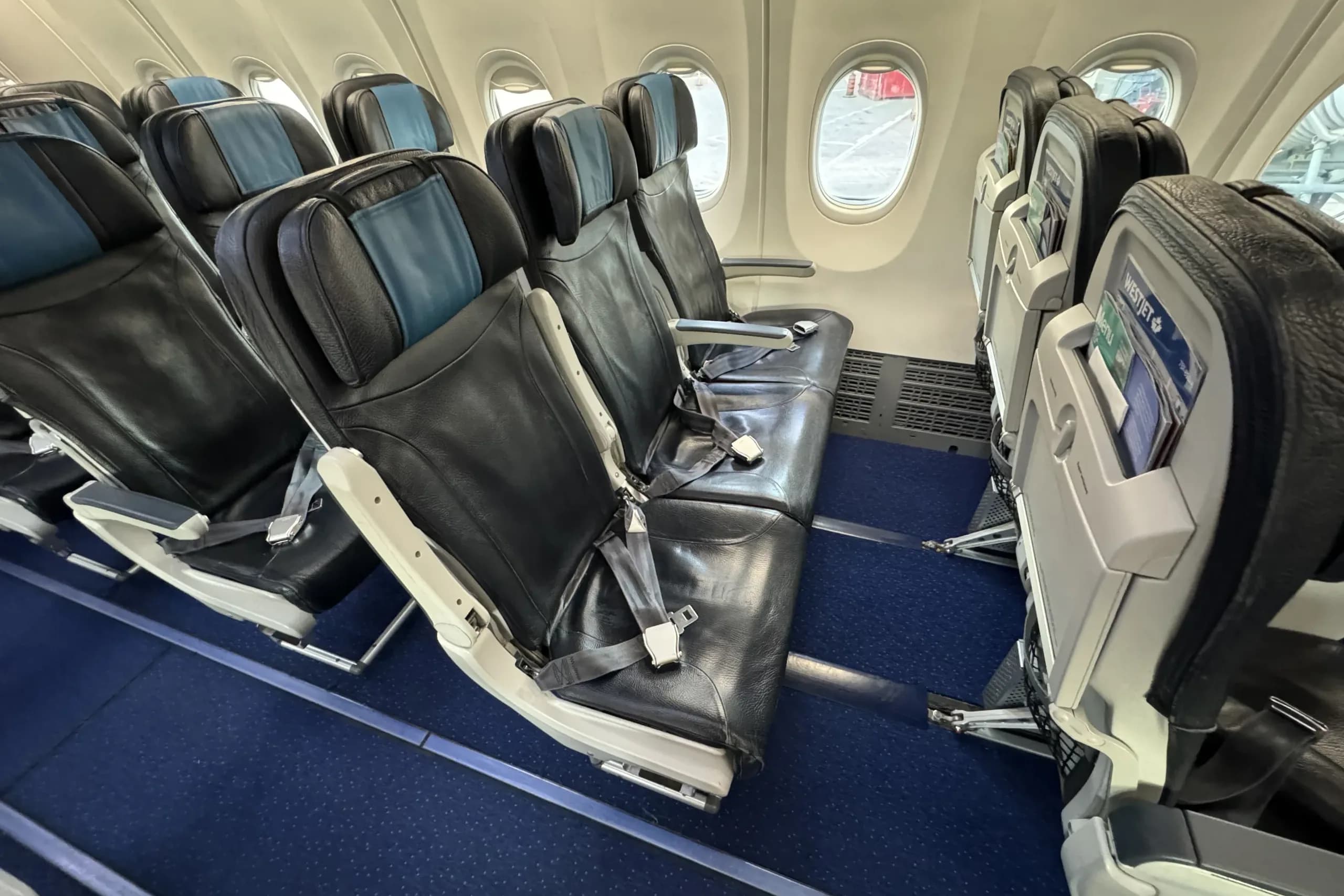
I'd argue this is telling. When your fare rules line up more closely with a ULCC than with your full-service competitors — as well as offering economy seats that don't recline, just like Flair's — it raises a fair question about if competitor alternatives are a better choice for many reasons.
What the Recent WestJet Strike Revealed
In my opinion, the recent WestJet strike brought all of this into sharp focus, or at least I think it should have.
When the airline offered a "flexible change/cancel policy," it framed the move as a customer-friendly gesture for anyone worried about disruption. If you had a flight scheduled to depart between July 30 and August 6, you could change it or cancel it for no fee.
For the vast majority of fares, cancelling during that window would only refund you to a Travel Bank credit. Unless you understood your specific fare rules, you could have cancelled your flight and wound up with nothing but a credit to spend on the WestJet website in the future.
That's a problem if your actual goal was to rebook on another airline to salvage your trip. You'd have effectively locked your money into WestJet at the exact moment you might have wanted to fly with someone else.
Frequent WestJet travellers may have understood the fare rules, but I don't think the average traveller would have dug too far into the fare rules.
If you had simply waited for WestJet to cancel your flight instead of cancelling it yourself, the outcome could have been very different.
When an airline cancels your flight for reasons outside of the airline's control (Canada's APPR consider labour disruptions situations outside of the airline's control), you're entitled to a full refund to your original form of payment, regardless of which fare you booked, if you can't be rebooked within 48 hours of the flight's original departure time.
So the "flexible change/cancel options" WestJet promoted actually put some travellers in a worse spot than doing nothing at all. If you jumped the gun and cancelled yourself, you traded a potential cash refund for a WestJet-only credit.

In my opinion, this is exactly the kind of situation where understanding your fare rules pays off. The traveller who knew to wait came out with their money back and full freedom to rebook elsewhere.
The traveller who took WestJet's messaging at face value came out with a credit and a reason to keep flying WestJet. It's a subtle distinction, but during a strike, it makes all the difference.
Conclusion
WestJet's decision not to offer a fully refundable economy fare isn't a dealbreaker on its own. WestJet loyalists will happily accept a Travel Bank credit, and many won't ever notice the difference.
But the strike exposed just how much that distinction can matter at the worst possible moment. If you cancelled a standard economy fare yourself, you locked your money into WestJet – whereas waiting for the airline to cancel would have gotten you a full cash refund and the freedom to rebook anywhere (assuming that you'd be delayed for more than 48 hours).
If you fly WestJet often and don't mind keeping your money within their ecosystem, the current fare structure probably works fine for you. If you value the ability to walk away with your cash back, Air Canada and Porter offer economy fares that WestJet simply doesn't match.
Going forward, I'll be watching to see whether WestJet ever introduces a true refundable economy fare to close this gap. Until it does, I think it's fair to view WestJet as a carrier that aligns more with Flair on fare flexibility and seat recline, and not with the full-service airlines it likes to be compared to.

T.J. is curious about everywhere he hasn’t been to yet. Exploring countries by foot and connecting with locals guide his love for travel. Earning and redeeming points to jazz up the experience has become the icing on his travel cake.



Member Discussion