
My First Stay at a Domestic Hotel Brand in Shenzhen

I was wrapping up a recent trip to Hong Kong when I decided to stretch the itinerary a few days into Shenzhen. The push was that Canadians can now travel to mainland China visa-free, which turned the cross-border hop into a high-speed train ride instead of a visa process.
Browsing for a hotel, I started with the usual suspects. Marriott, Hilton, Hyatt, and Accor all run properties in Shenzhen. A friend who lives in the city pushed back and suggested I try a domestic Chinese brand instead.
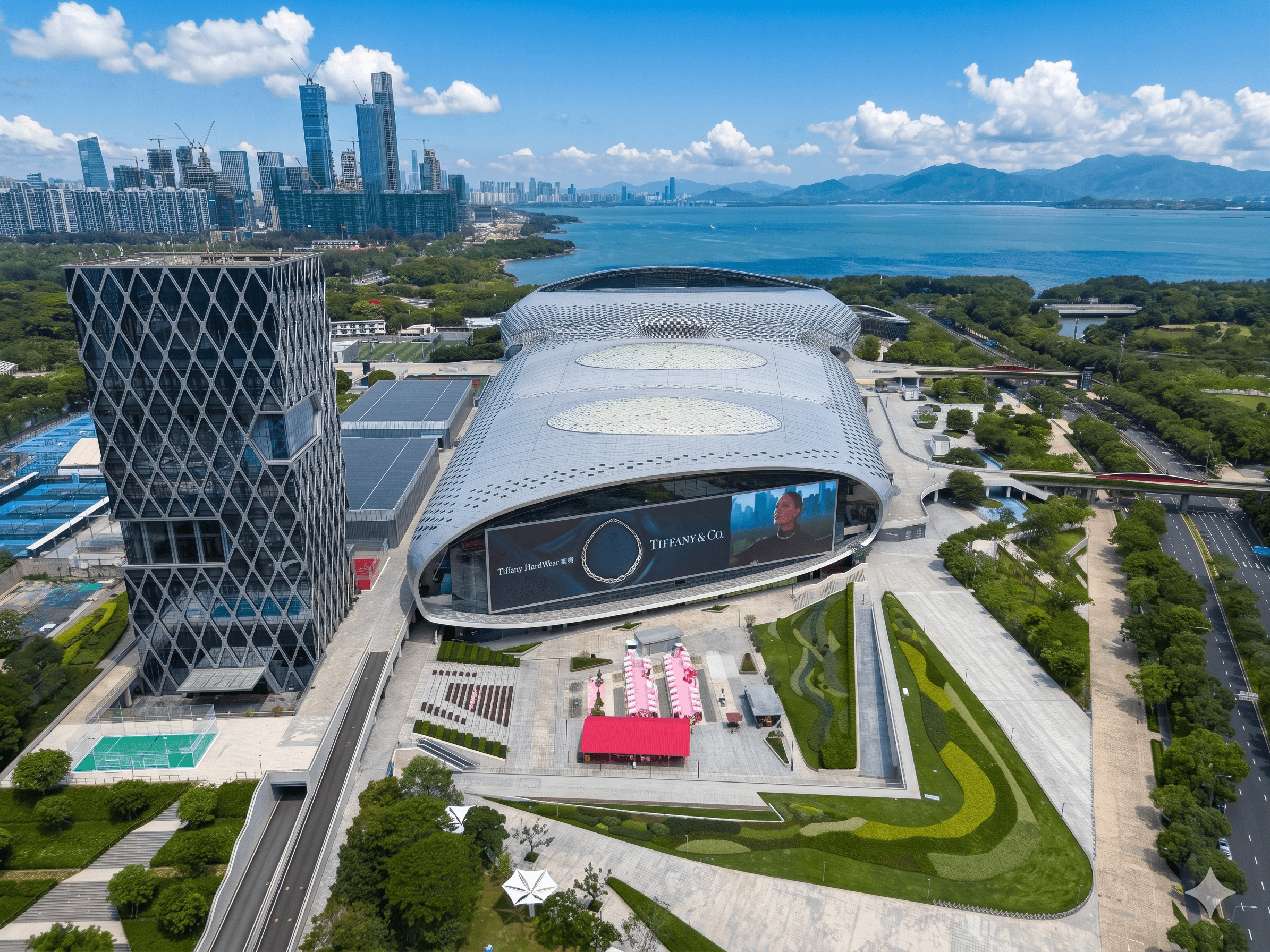
I landed on the Crystal Orange Hotel at the Shenzhen Bay MixC, in the Nanshan district. The short answer after a few nights is that I'm sold on the value, but the friction is real, and you should know what you're walking into before you book one.
What Is H World?
Crystal Orange sits under H World Group, formerly known as Huazhu, which is essentially the Marriott equivalent of China in terms of operational strategy and standardization.
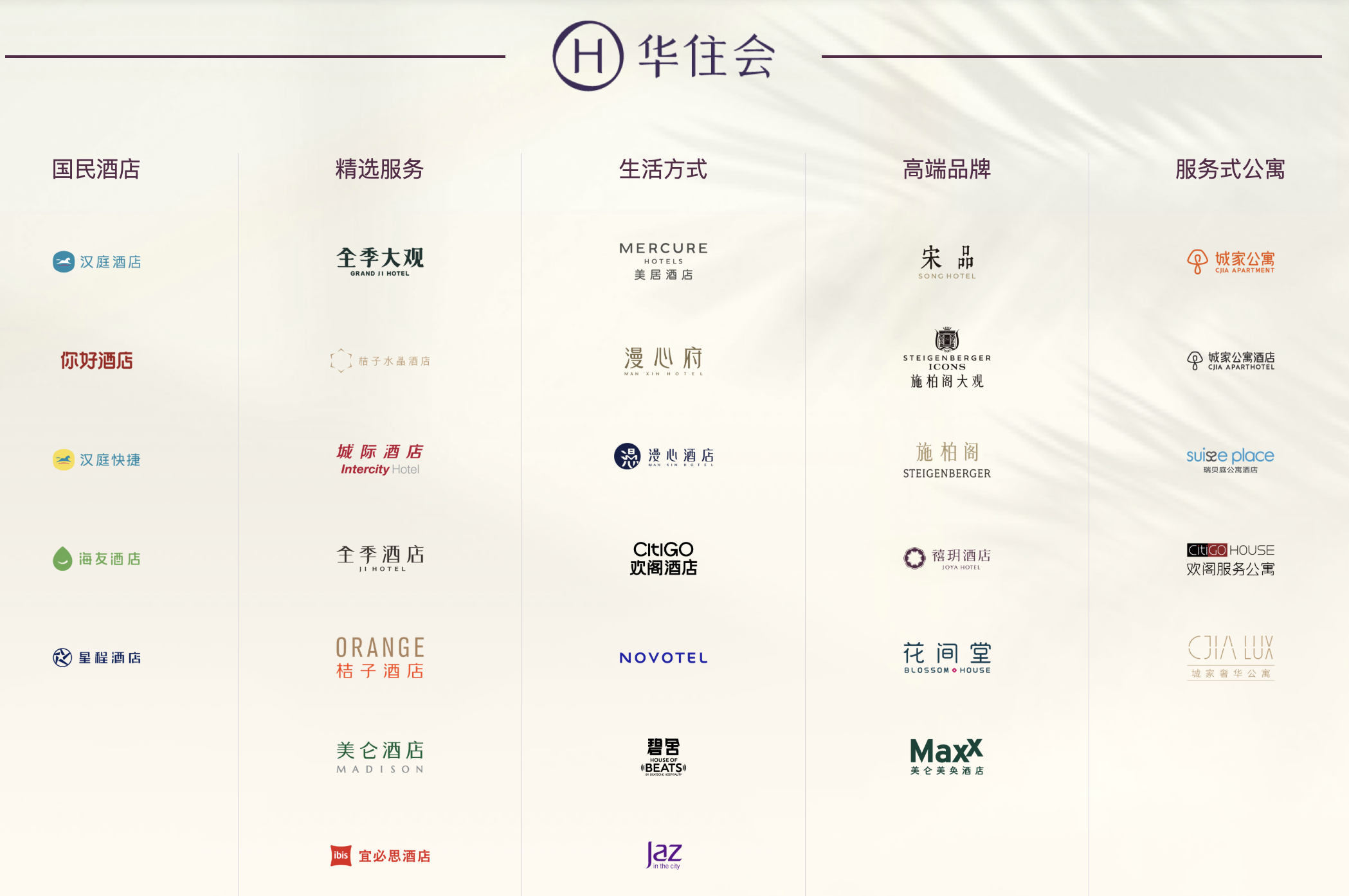
Tying the portfolio together is H Rewards, the H World loyalty program. Confusingly, the English-facing site hrewards.com only lists European brands like Steigenberger and IntercityHotel, but the massive Chinese-domestic version of the same program is what covers Crystal Orange and most of the H World portfolio.
That Chinese version is where the scale lives. H Rewards has somewhere around 290 million members on the books, playing at the same level as the biggest international chains by sheer member count. The catch for non-Chinese travellers is that the program rarely shows up in the Western miles-and-points conversation.
The difference is the playbook. H World leans heavily into tech and domestic dominance instead of chasing the global M&A strategy that Marriott and Hilton have built their reputations on. You won't see a flagship H World property opening on Fifth Avenue any time soon, but inside China, the footprint is hard to overstate.
My Stay Experience
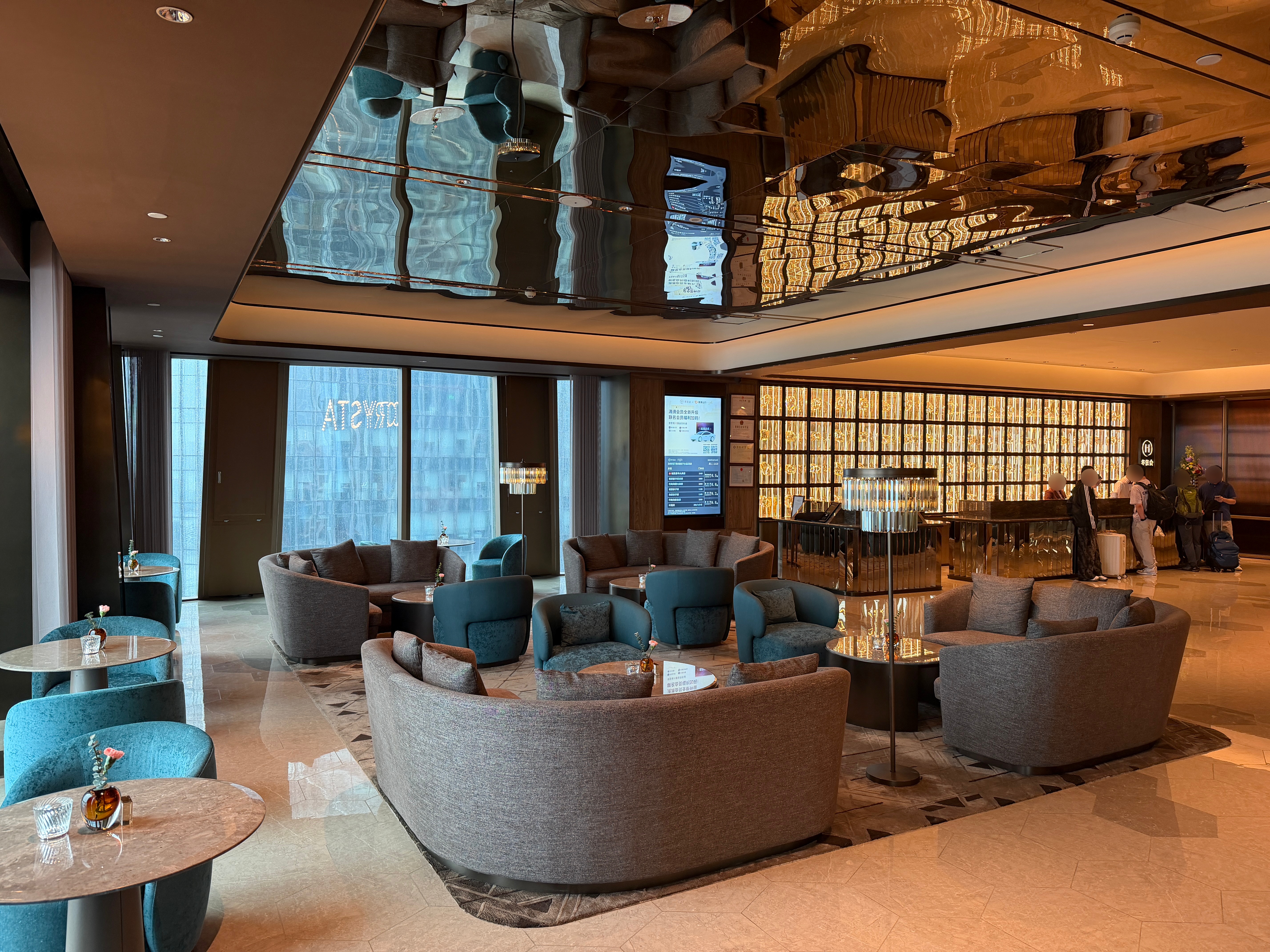
The specific branch I booked is built into a podium tower at the Shenzhen Bay MixC complex. The lobby sits up on the 20th floor, with guest rooms running from floors 20 to 25, and the property is steps from the Houhai subway station and the massive MixC luxury mall.
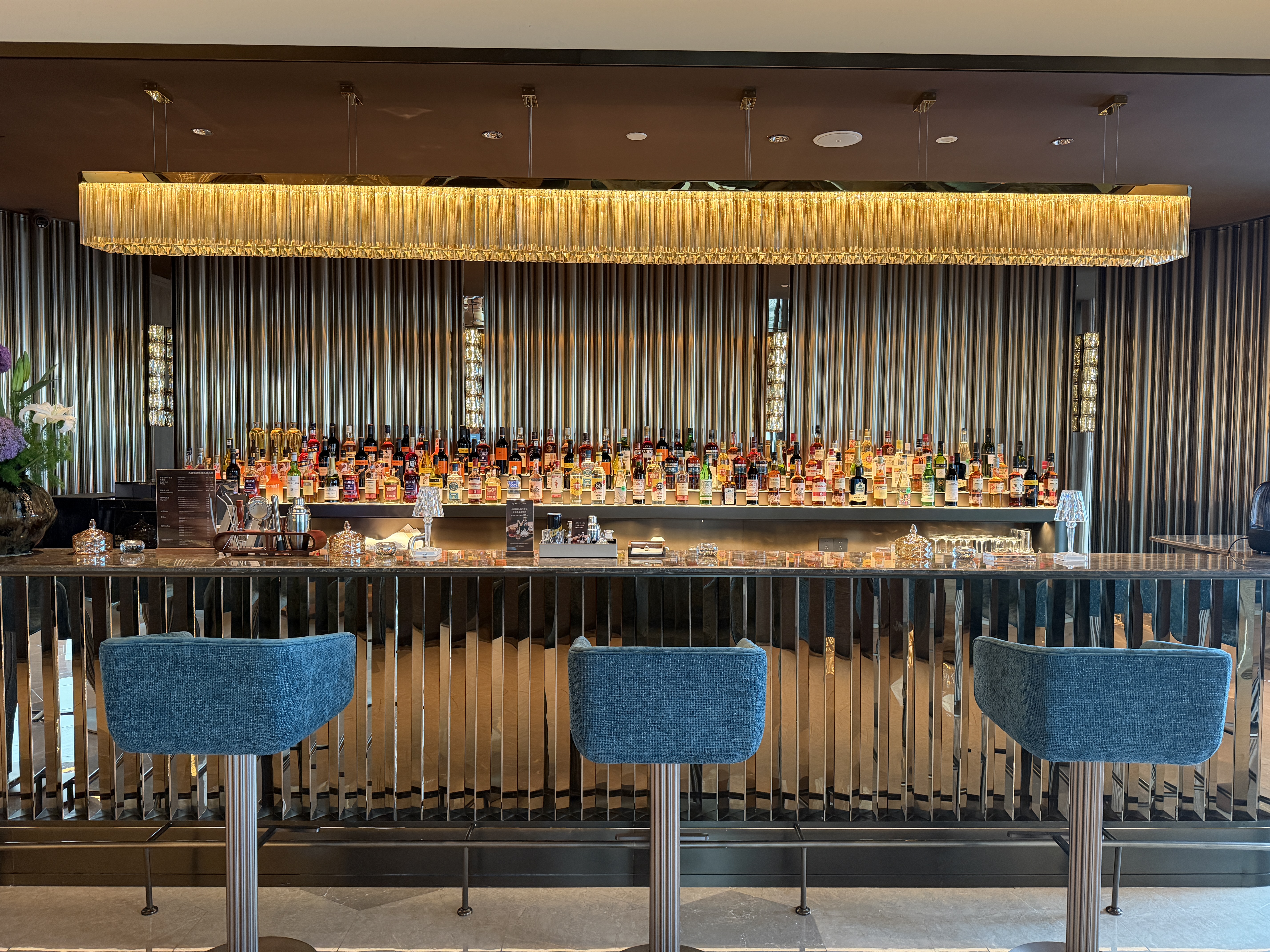
Stepping into a lobby on the 20th floor is its own kind of disorientation the first time. The elevator ride up replaces the usual walk in off the street, and floor-to-ceiling windows turn the Shenzhen Bay skyline into a built-in backdrop.
The tech side is where the contrast with a comparable Marriott or Hilton gets sharp. Check-in normally happens through the proprietary H World app. The same app controls the lights, climate, curtains, and the do-not-disturb sign once you're in the room.
In my case, I ended up checking in at the front desk anyway, because the app is fully in Chinese and I couldn't navigate it without being able to read.
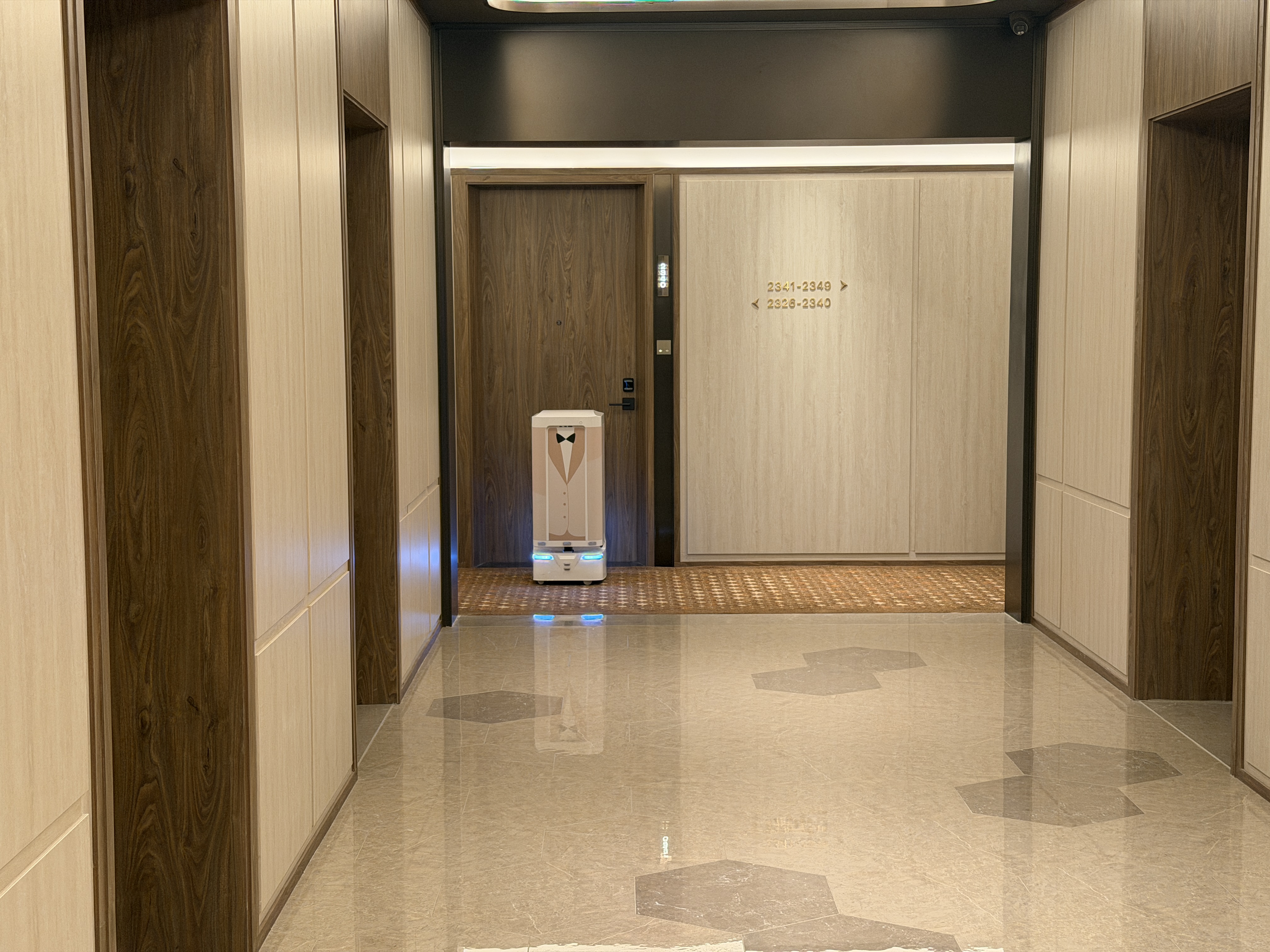
Food delivery uses autonomous robots. You order through a delivery app, the courier drops your meal at the lobby, and a wheeled robot rides the elevator to your floor and rolls itself to your door. A short beep on the room phone tells you it's outside.
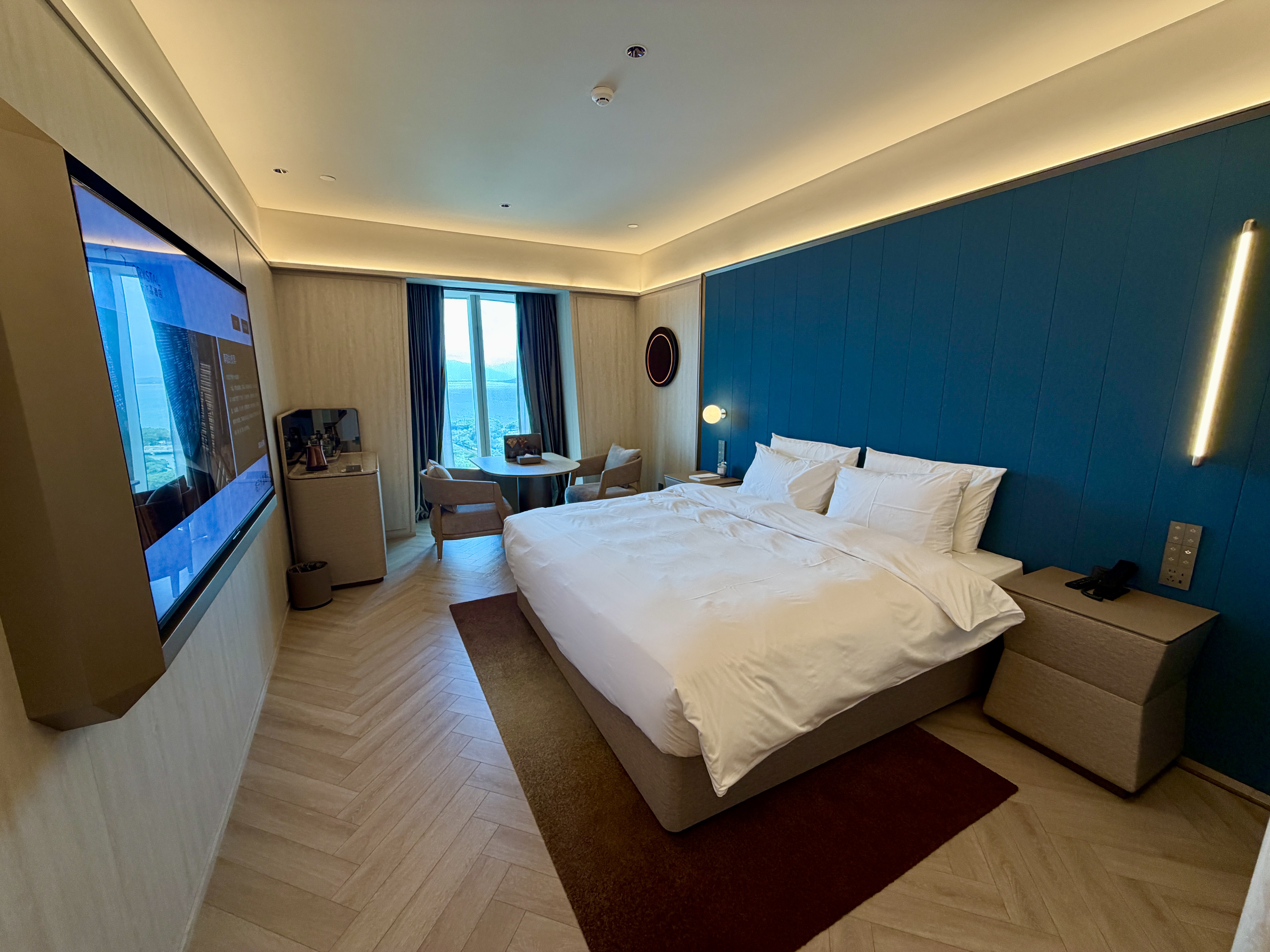
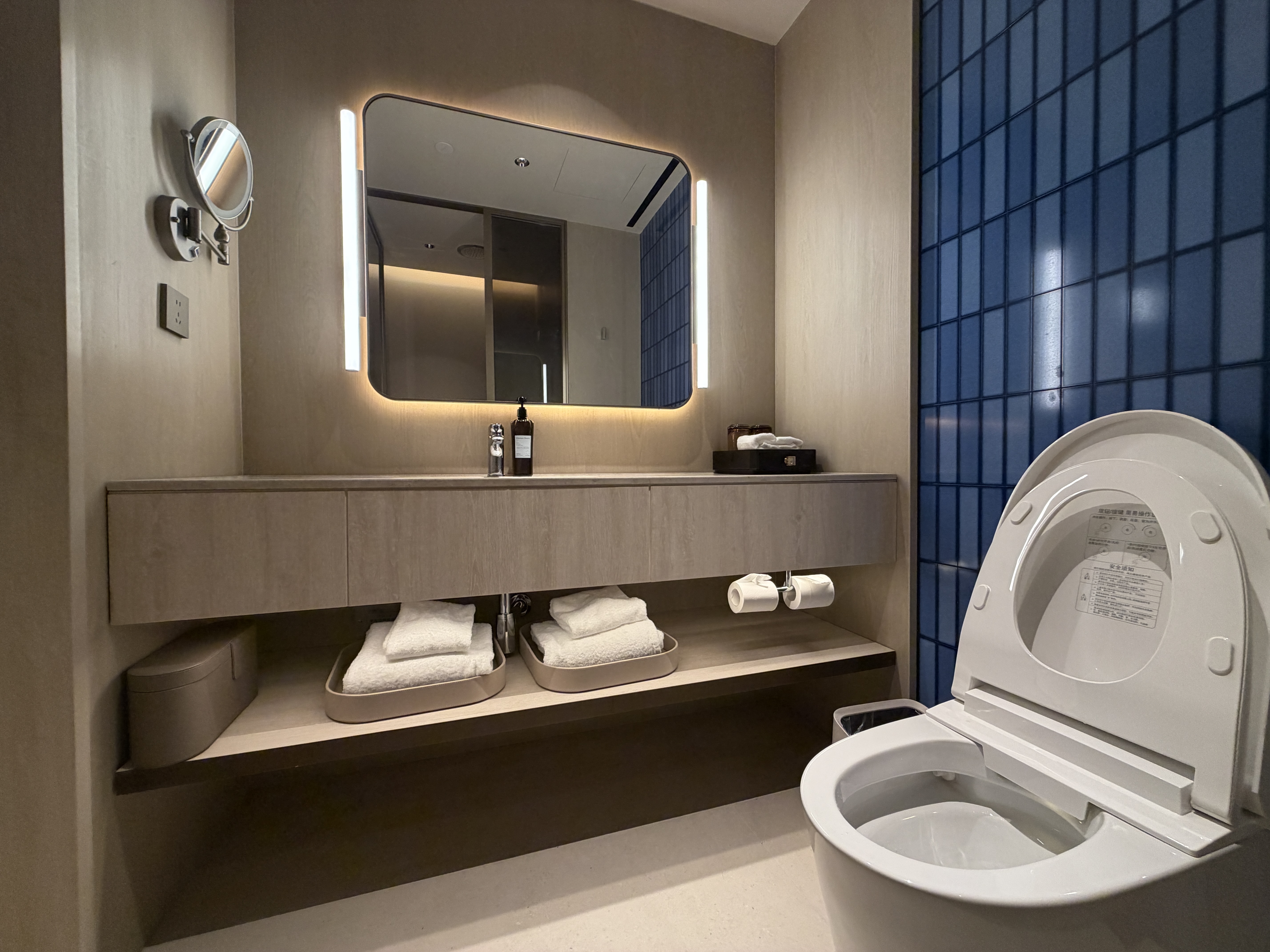
The room itself was compact but well thought out. The desk doubles as the dining surface, the bathroom is glassed off behind sliding panels, and storage is clever rather than generous.
The bathroom leans into a modern Chinese aesthetic. A smart toilet with bidet functions, a blue-tiled feature wall, and Champs fleuris-branded toiletries on the counter.
What I appreciated most was the tea and coffee station. Instead of the standard espresso pod machine that every Western hotel keeps defaulting to, the room comes with a proper teapot, loose-leaf options, and a pour-over coffee setup with a filter cone and pre-portioned grounds.
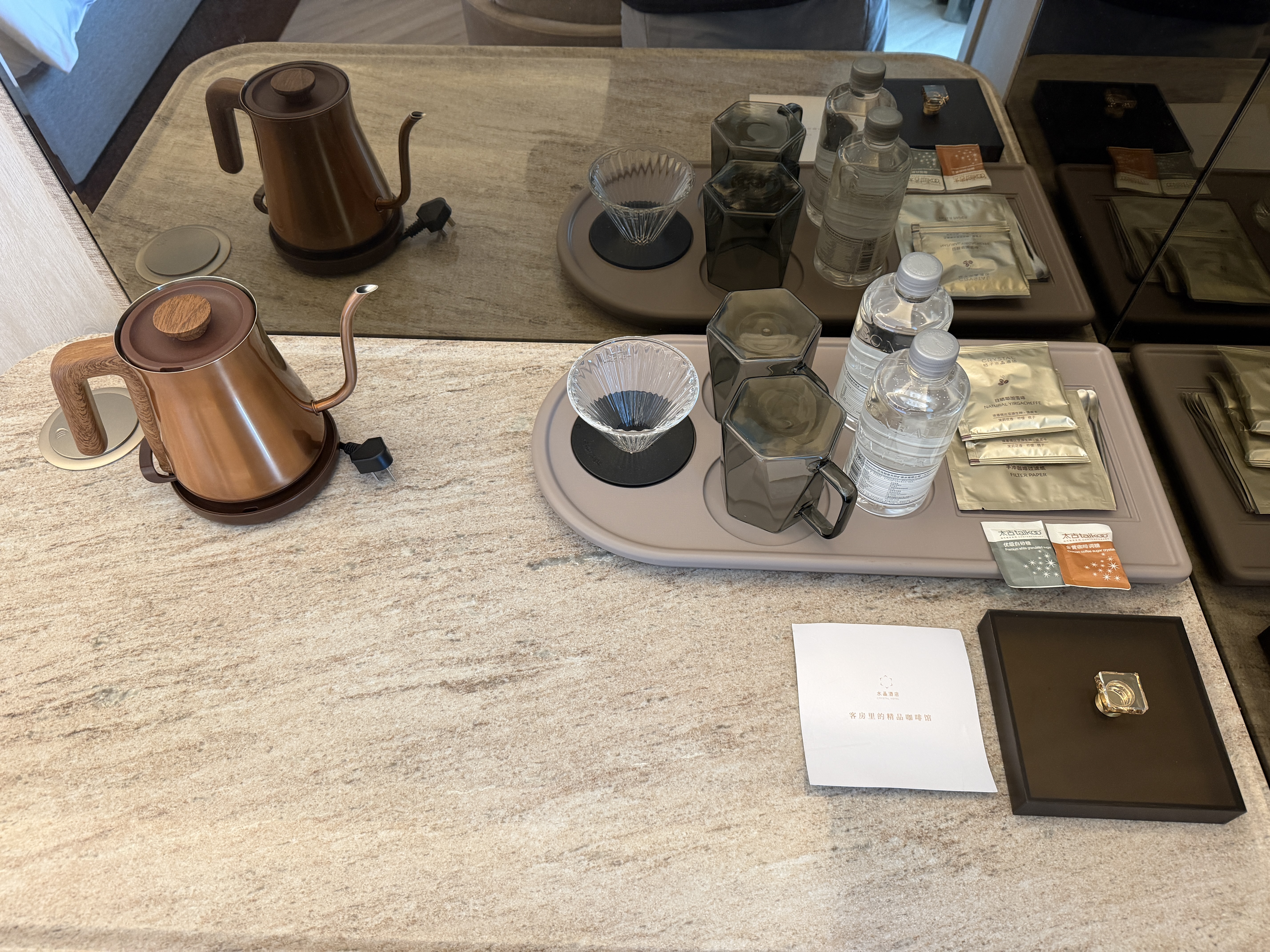
Personally, this is exactly the setup I'd choose at home, and I prefer it over a Nespresso pod machine where I never really know whether it's been properly cleaned.
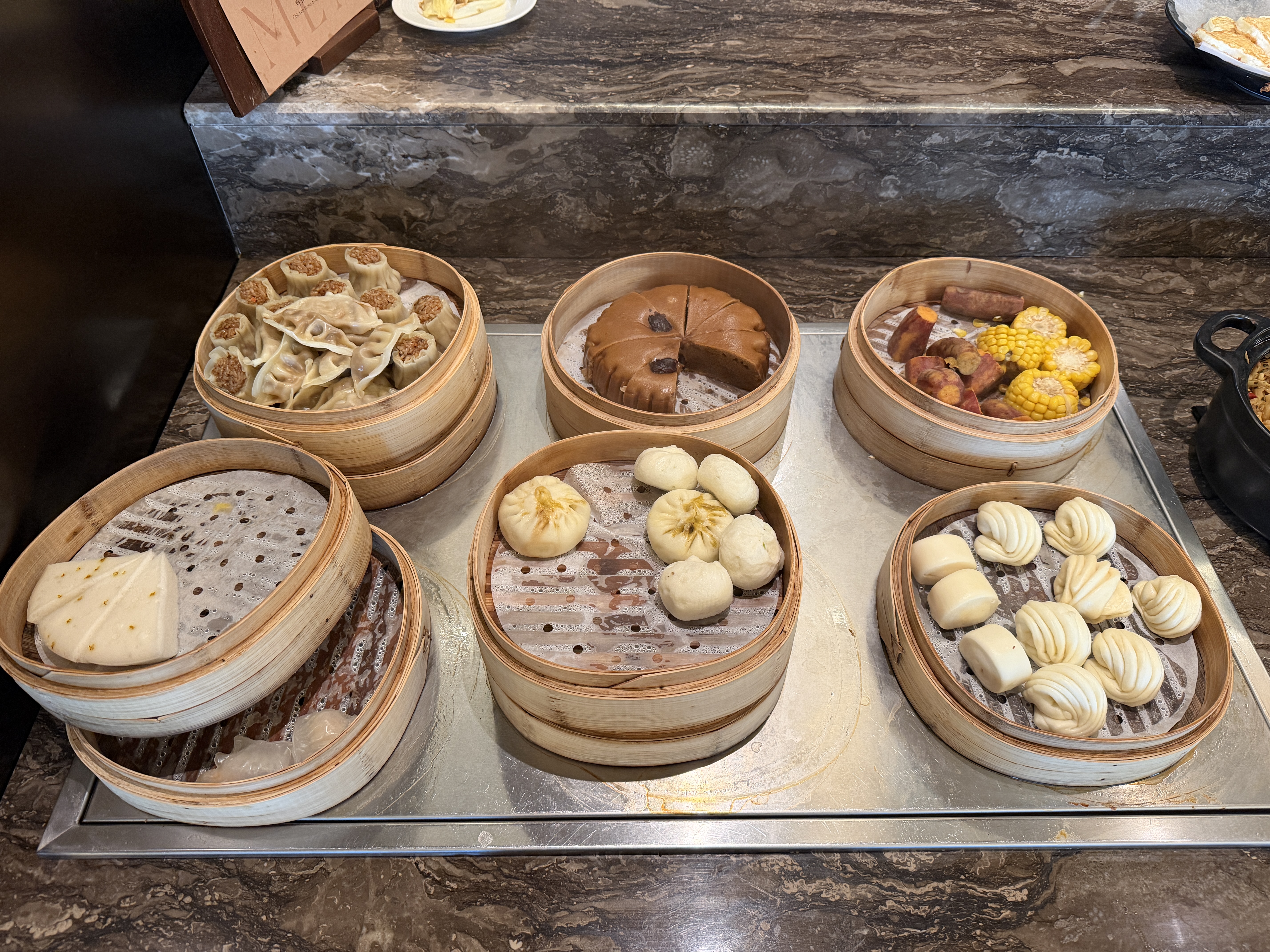
Breakfast was Chinese-focused with a light Western spread on the side. If you're used to Western hotel buffets where the Western items are the headline act, the proportions will feel reversed.
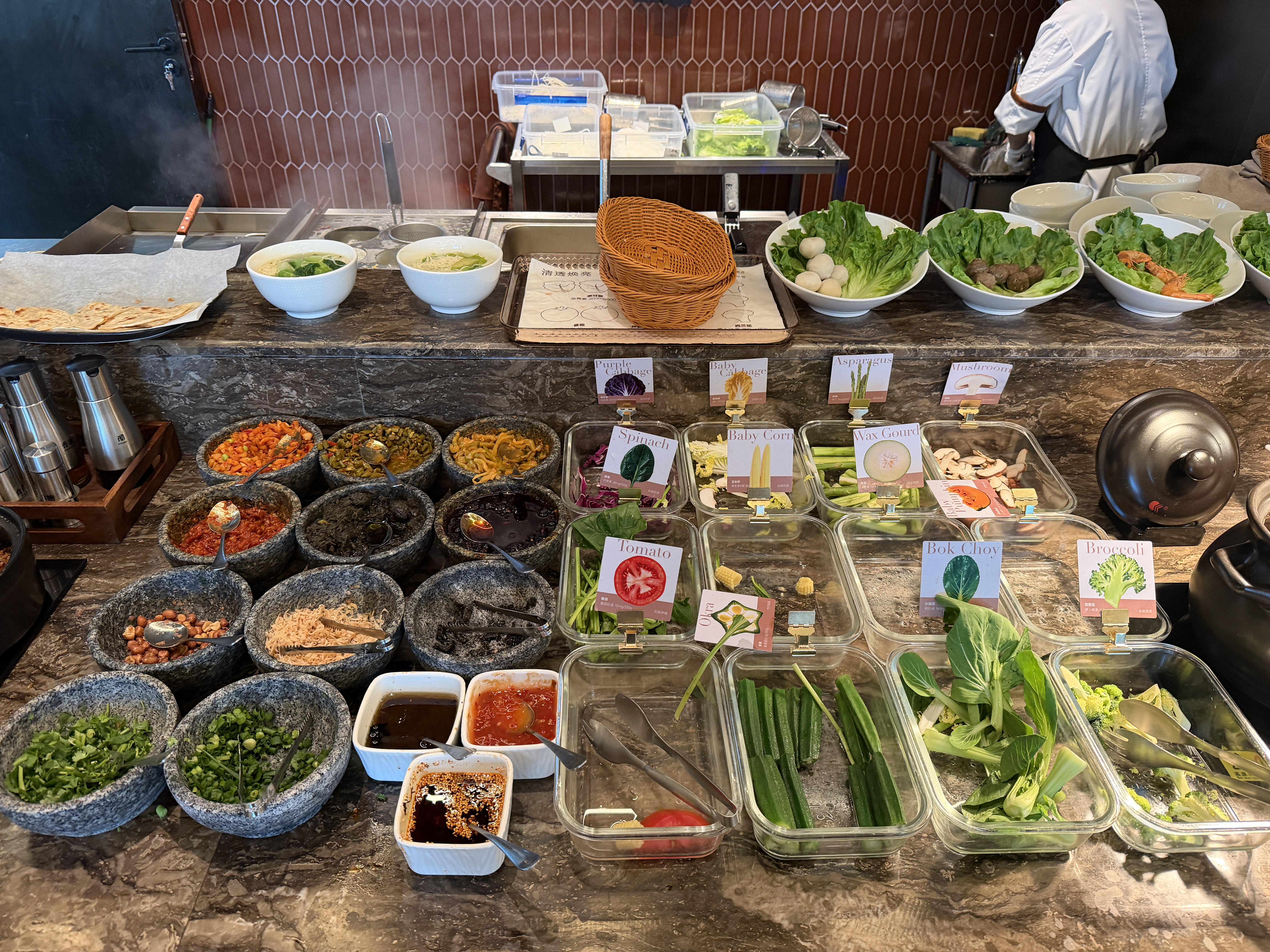
The dim sum side ran the usual range, from bao and dumplings to a few items I couldn't name and happily ate anyway.
On the lobby floor, there's a free self-service laundry room with washers and dryers. No coin slot, no app to download, no extra fee tacked onto the folio.
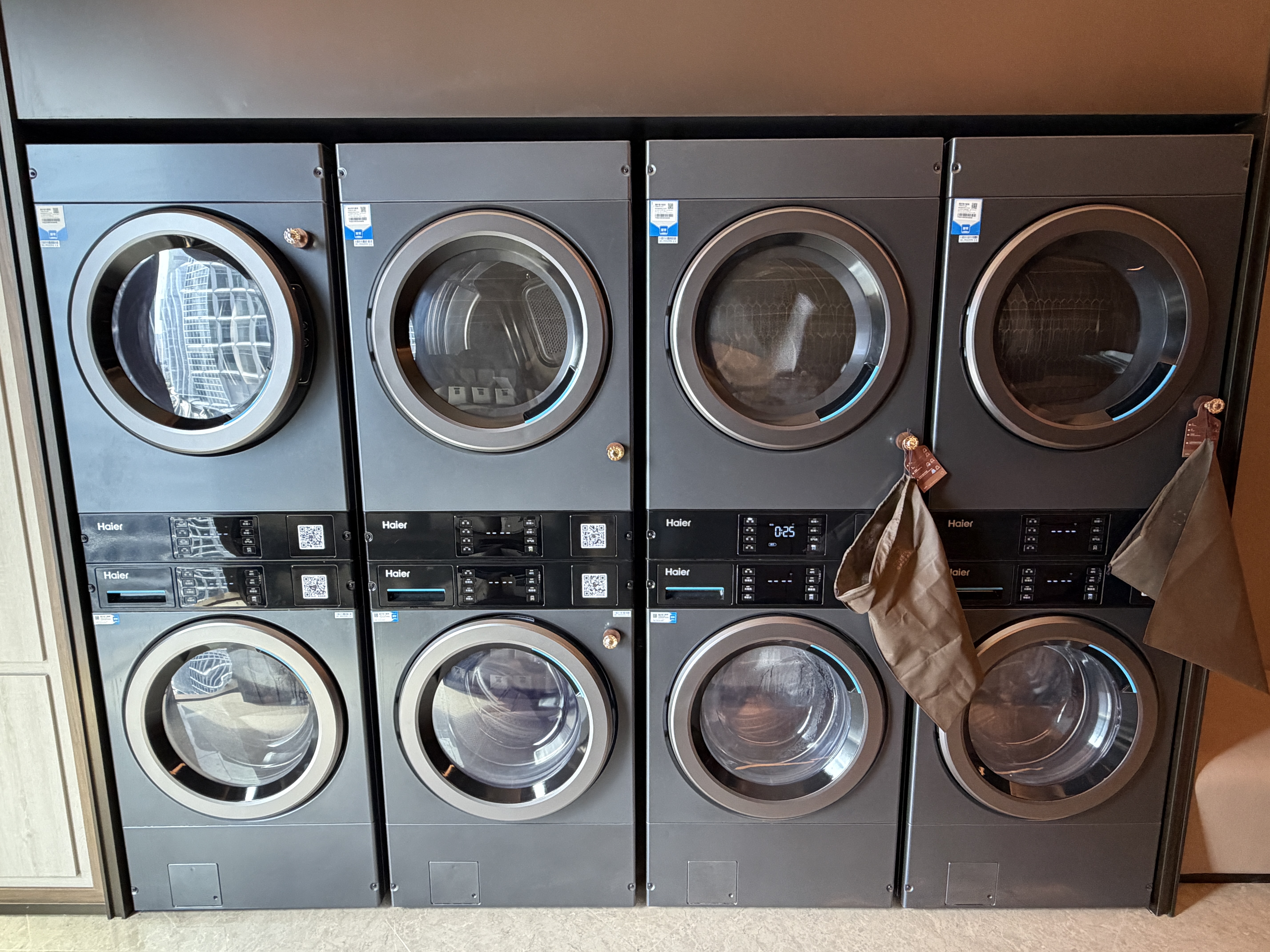
That's something you rarely see at mid- to high-tier Western brand hotels. Laundry there is usually a premium service you request from housekeeping, and it can cost a fair bit. The service typically takes a day too, so if I need to wash clothes quickly for a night out, it's not ideal.
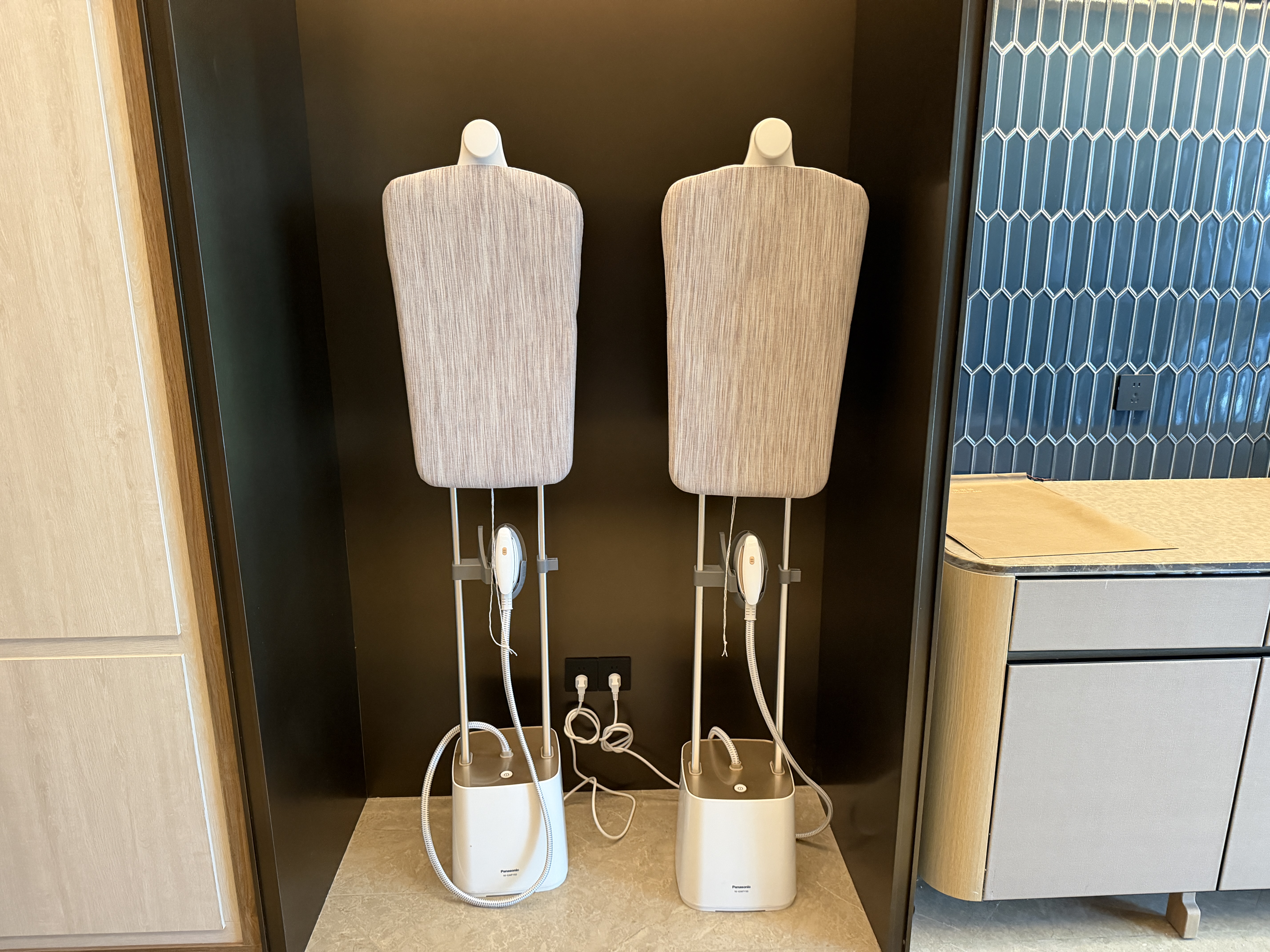
On the practical side, the property also includes a pair of standing garment steamers. They're useful after a long flight, and free to use.
Where the Friction Shows Up
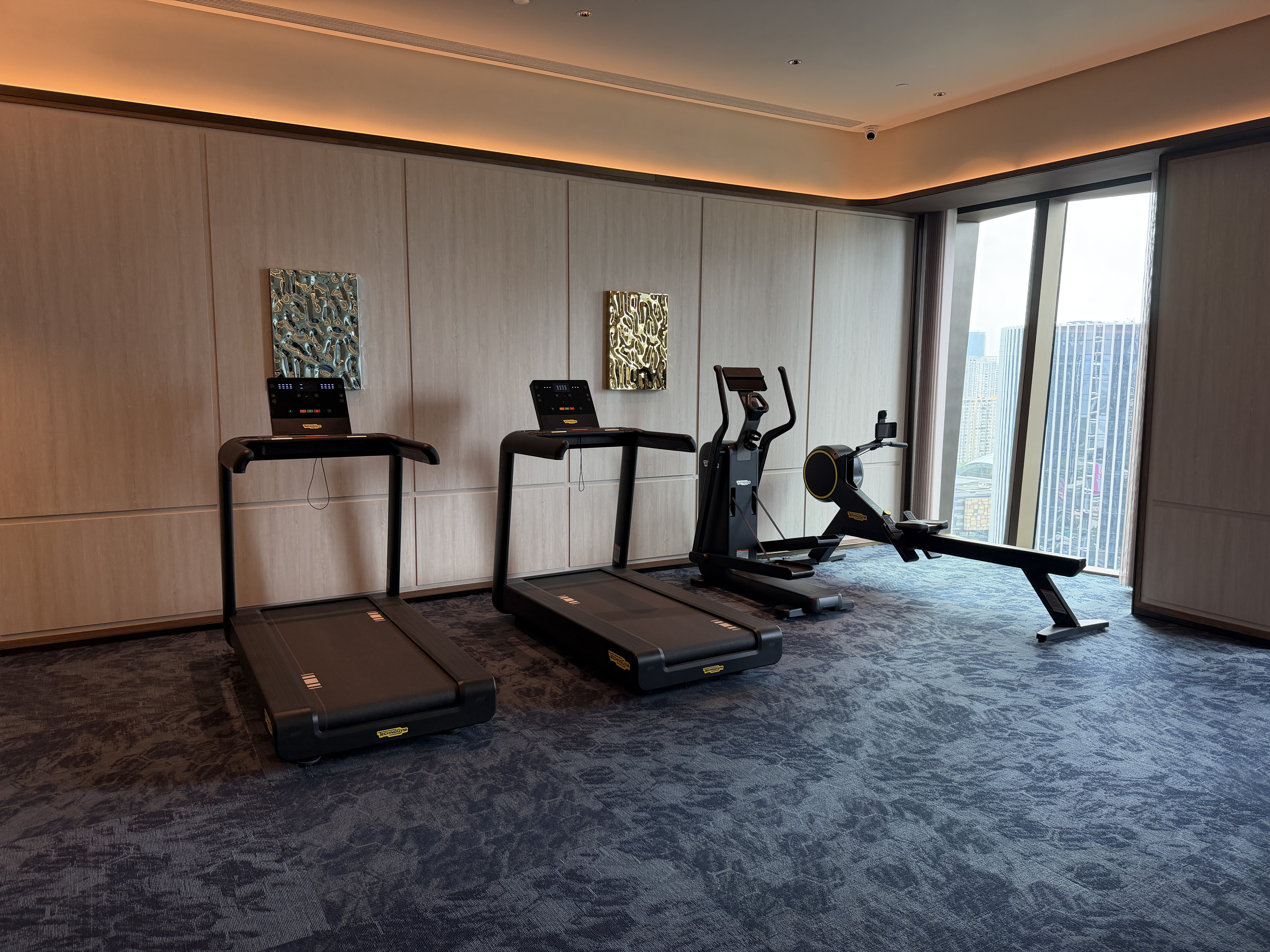
The property isn't perfect. Rooms are smaller than what you'd get at a Western luxury chain in the same neighbourhood, and the gym is lean to the point of being symbolic. Two treadmills, an elliptical, and a rower.
The bigger issue is the language barrier, and it doesn't show up in the price comparison. The H World app does not properly support English. You can muscle through the booking flow with a translation app open on a second phone, but there are moments where a Chinese-only confirmation screen will trip you up, and you don't want to find that out at midnight after a long flight.
If you can't read Chinese and don't have a local contact to help with the booking, Trip.com is the easy workaround. It's the English-facing front of the Ctrip group, the dominant OTA in mainland China and a major player across Hong Kong, Singapore, and the rest of greater Asia.
The platform handles the reservation in English and manages any changes on your behalf. Rates won't always beat booking direct, but even on a paid-breakfast rate, a domestic Chinese property through Trip.com often still comes in below a comparable Marriott or Hilton stay where you'd otherwise lean on elite status for complimentary breakfast.
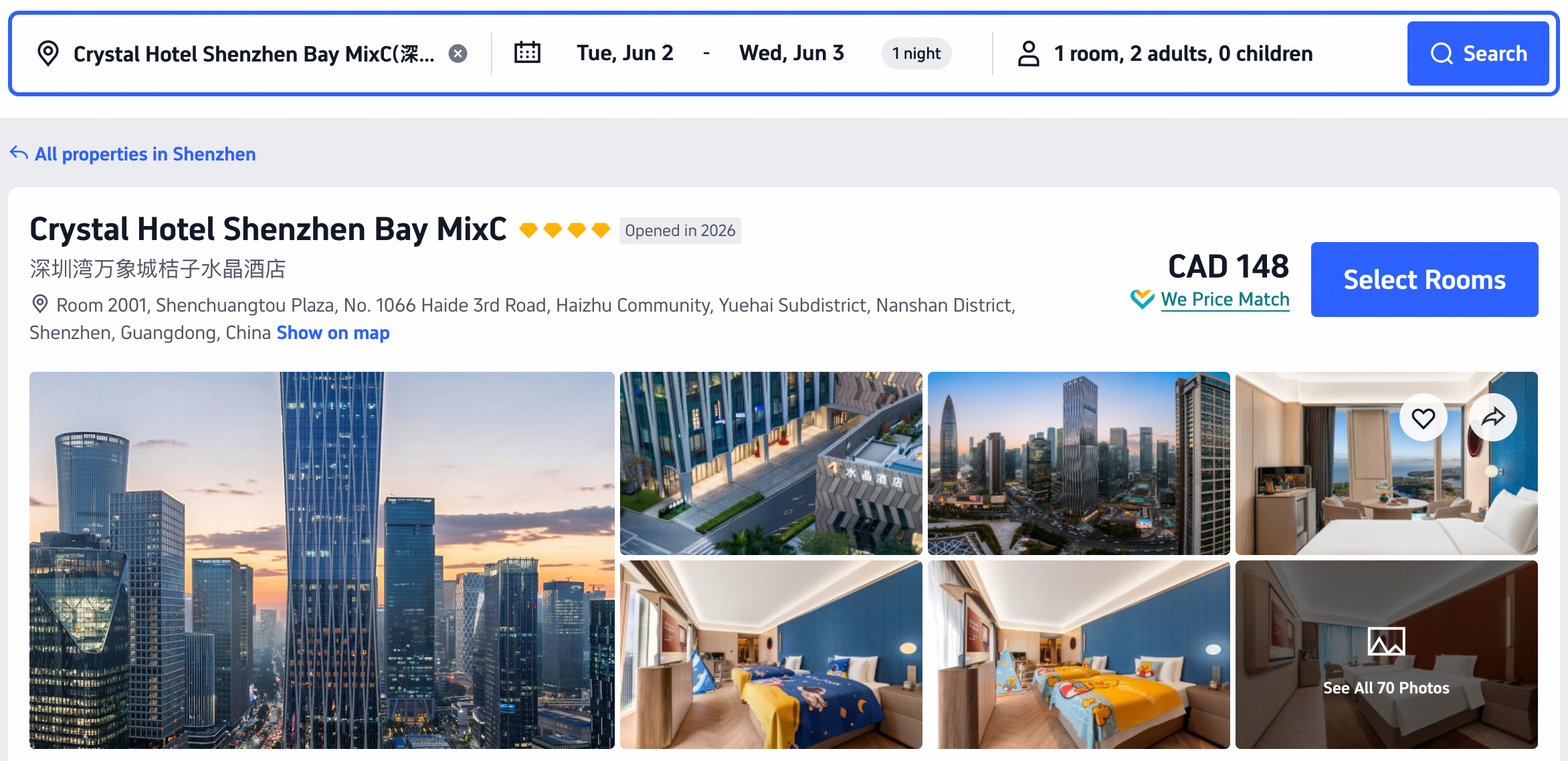
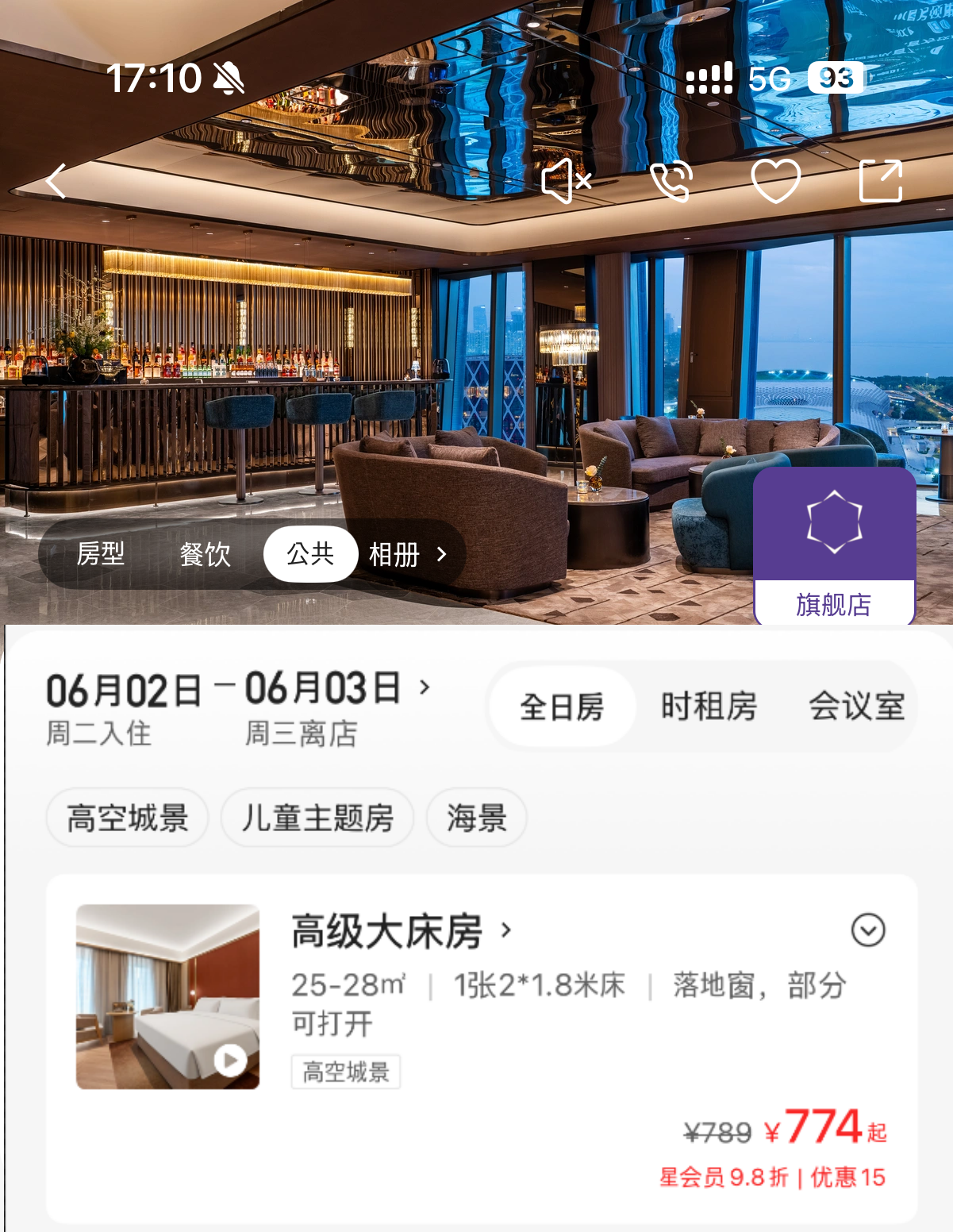
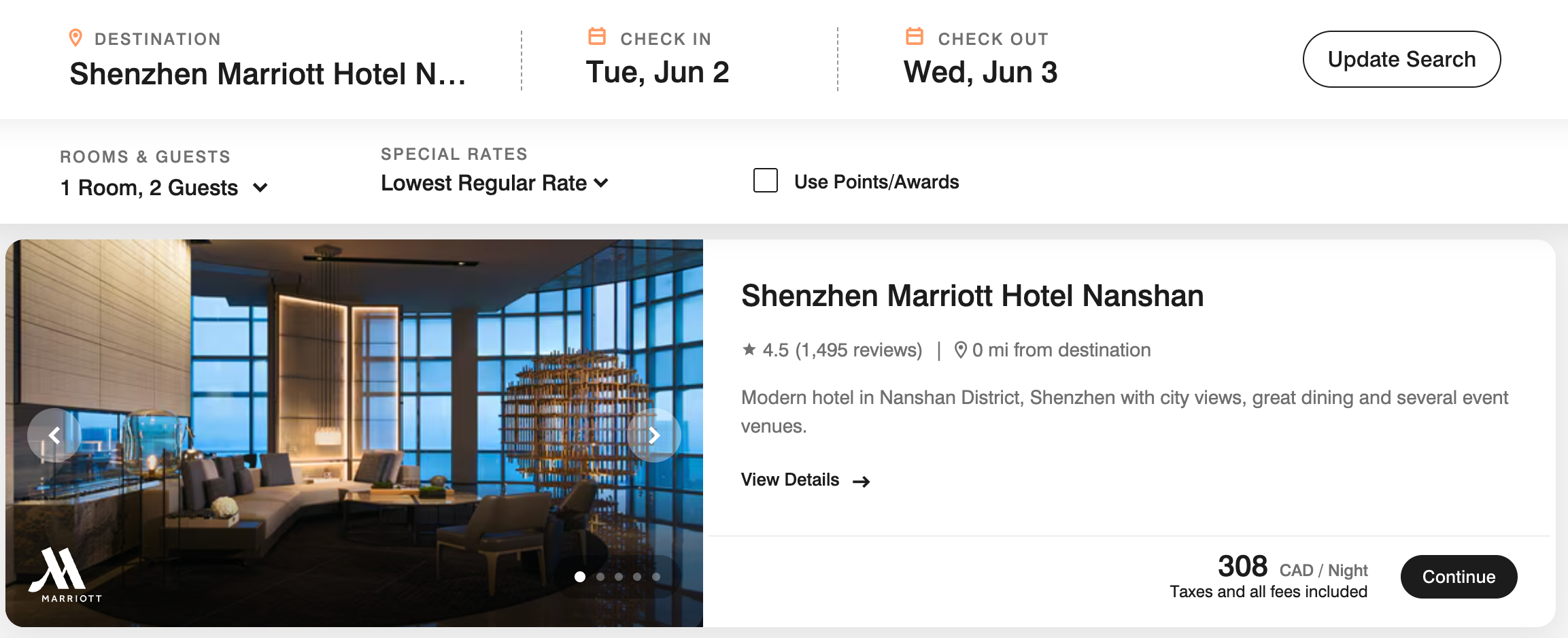
For a quick side-by-side with a Western brand, here's a comparable Marriott in the same district on the same dates.
At the front desk, English fluency was rare. The staff were patient and friendly, but the working language for any non-trivial conversation is Mandarin, and you should expect to lean on a translation app or a local contact for anything beyond a basic check-in.
One more translation note. Google services are blocked in mainland China, so Google Translate won't work out of the box. Either set up a VPN before you cross the border, or download an alternative like DeepL or Baidu Translate.
For routine requests like extra towels or a wake-up call, a few hand gestures and a translation app got me there. Anything more involved, like a billing question or a late checkout discussion, will need that translation app sitting on the counter between you and the staff.
One more practical warning. The Google Maps pin for this exact property is wrong. Not vaguely off, but actively pointing at the wrong building entrance.
Download Amap (also called Gaode Maps) before you land. It's the dominant local mapping app, and it had the right entrance, the correct subway exit, and the actual building layout.
The Value Math
For context, Shenzhen Bay is one of Shenzhen's tier-one business districts. It's home to major tech companies, retail anchors, and high-end residential, and the international hotel chains price their properties here accordingly.
Pricing varies, but the gap is sizable. On the nights I was looking at, a room here ran a fraction of what the international brands were charging in the same part of Shenzhen, for the same floor height and a more modern build.
Stack on the fact that the property is right next to Houhai subway station and the MixC shopping mall, and the value proposition gets harder to argue with. The international groups have responded with things like enhanced member benefits across China hotels, but the value gap is still wide.
You're trading polish for arbitrage. That's the trade, and for the right traveller it's a good one.
Conclusion
This isn't for everyone. If you want a fully Western-catered experience where the front desk speaks English fluently and the app works the way you expect, stick to the international chains and move on.
But if you're willing to put in 15 minutes of setup with Amap, the H World app, and a translation tool open on your phone, the upside is real. You unlock high-floor, well-located, modern rooms in some of China's best neighbourhoods, often for a fraction of what the familiar names are asking. It's the same trade-off you make any time you book outside the Big Four hotel families.
My plan going forward is to mix this kind of stay into the rotation rather than treating every China trip as a Marriott or Hilton default. H World runs a whole stack of sub-brands at different price points, and Crystal Orange sits somewhere in the upper-middle of that range. There's room to experiment.
I'd book it again for routine business or transit nights, but for a special-occasion stay where I need fluent English handling, I'd still lean Western. Value usually lives outside the default options.

Jason thrives on connecting with the heart of a destination, seeking out experiences that go beyond the guidebooks.

First-year value
$336
Monthly fee: $15.99
• Earn 1,250 points per month upon spending $750 per month for 12 months
Member Discussion