United Introduces Base Fares for Polaris Business Class and Premium Economy

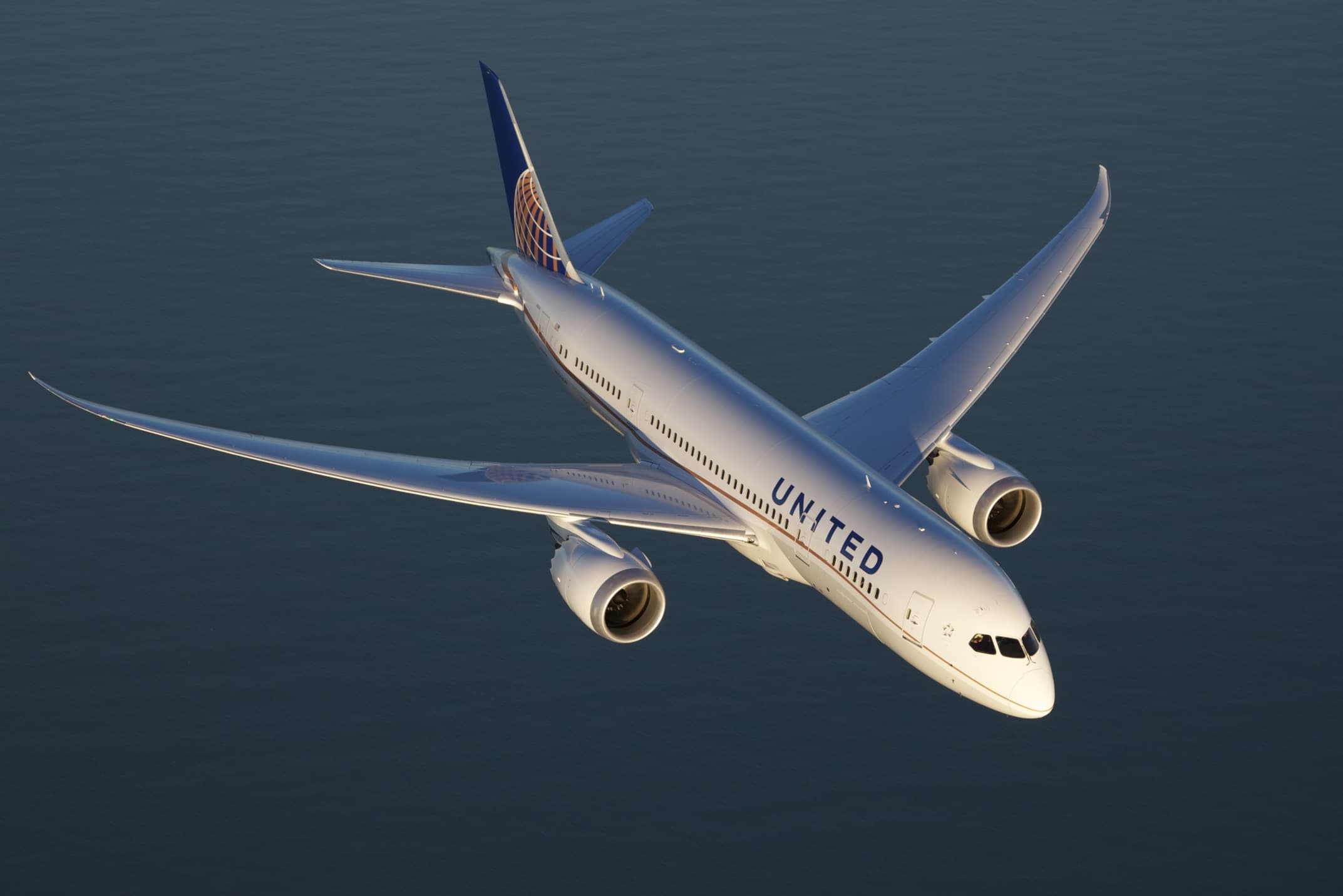
United Airlines is making changes to its premium cabin pricing with a new tiered fare structure for long-haul Polaris business class and Premium Plus (premium economy) flights.
Starting this month, the airline will offer three fare levels in its premium cabins on international, transcontinental, and select Hawaii routes: Base, Standard, and Flexible. Base comes with fewer included perks than what business class passengers have traditionally received.
So what’s changing, what stays the same, and what does it mean for Canadians who book United premium cabins?
The New Tiered Fare Structure
United is splitting its Polaris business class and Premium Plus cabins into three fare tiers: Base, Standard, and Flexible.
Andrew Nocella, United’s Chief Commercial Officer, said: “These new tiered options give customers more choice and make it easier to find a fare that includes the benefits they want most – whether that’s a great value, added perks, or maximum flexibility.”
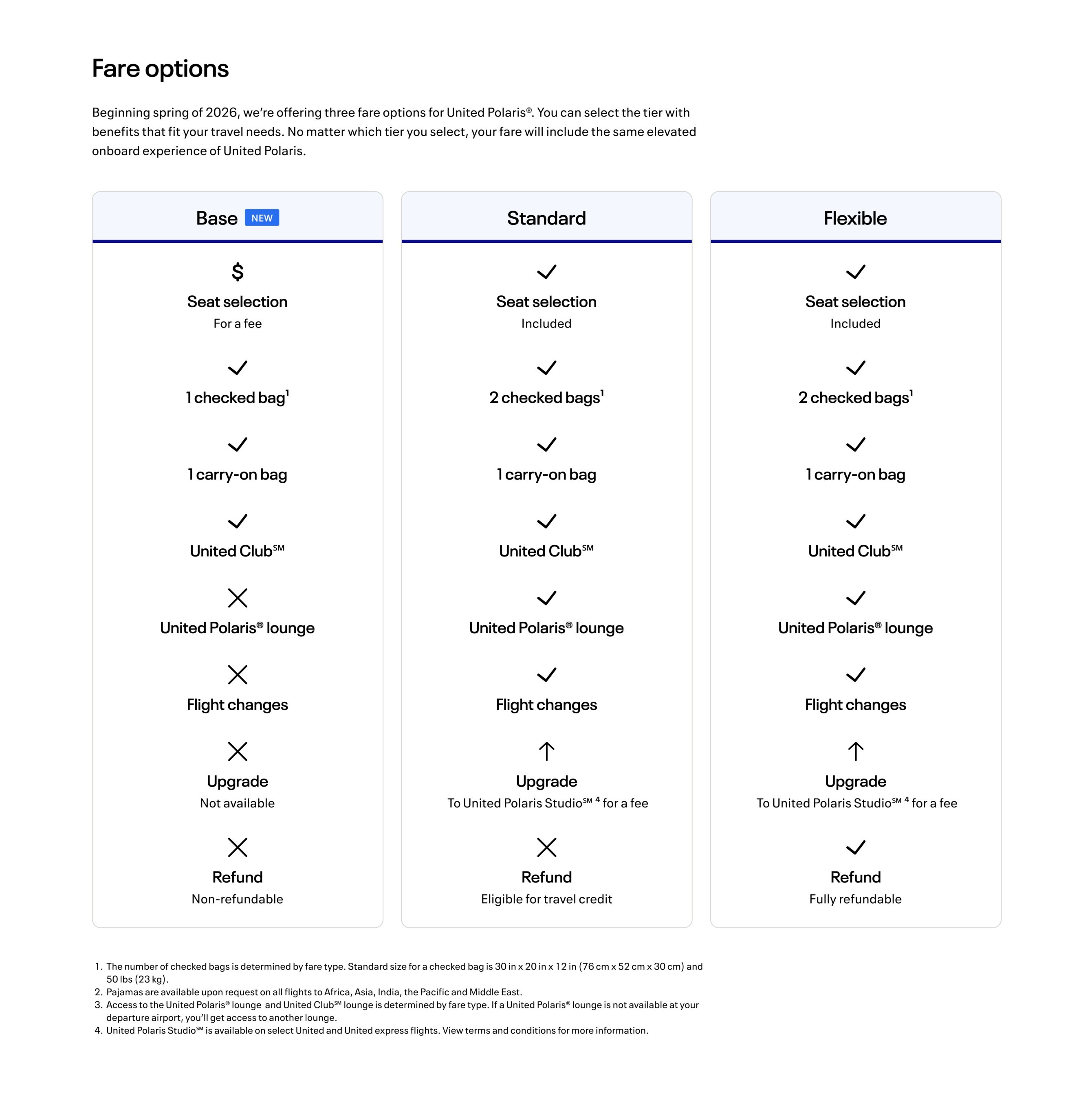
Here’s how the three tiers compare for Polaris business class:
- Base: Seat selection for a fee (even for elite members), one checked bag, United Club access only (no Polaris Lounge on United-operated flights), non-refundable and non-changeable, no upgrades to Polaris Studio, and no Premier Qualifying Flights earned
- Standard: Seat selection included, two checked bags, Polaris Lounge access, flight changes permitted, upgrades to Polaris Studio for a fee, and eligible for travel credit (but not a full refund)
- Flexible: Everything in Standard, plus fully refundable
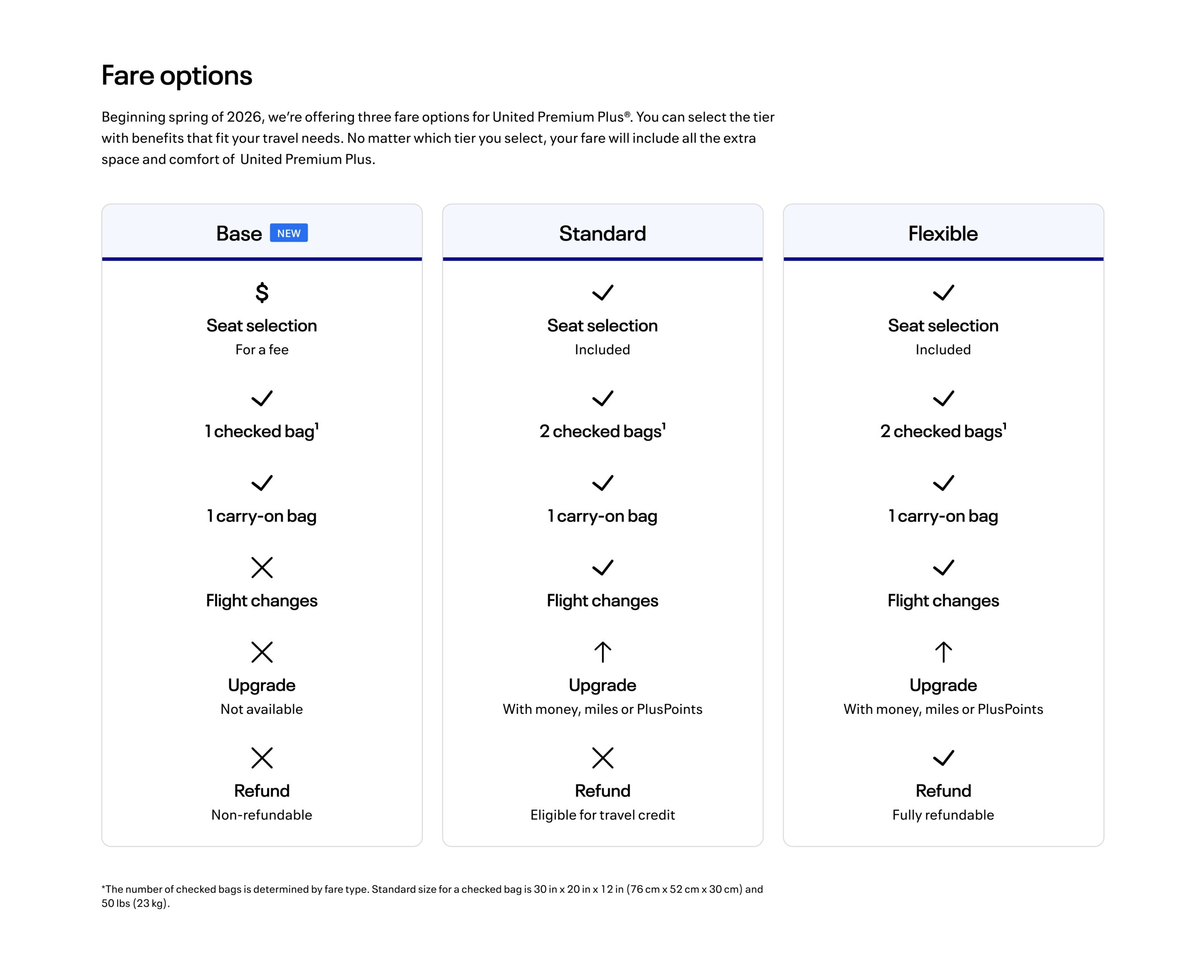
Premium Plus follows a similar pattern. Base fares require paid seat selection, include one checked bag, block flight changes, and are non-refundable. Upgrades to the business class cabin are not available on Base fares but are offered on Standard and Flexible tiers using money, miles, or PlusPoints.
It’s worth noting that wholly unused Base tickets can be cancelled with a fee, and the remaining value applied toward a new ticket. Base fares also still earn Premier Qualifying Points (PQP), just not Premier Qualifying Flights (PQF).
Expect this to roll out in select markets this month, with plans to expand throughout 2026 until the tiered structure covers every United plane with a Polaris business class cabin.
What Stays the Same Onboard
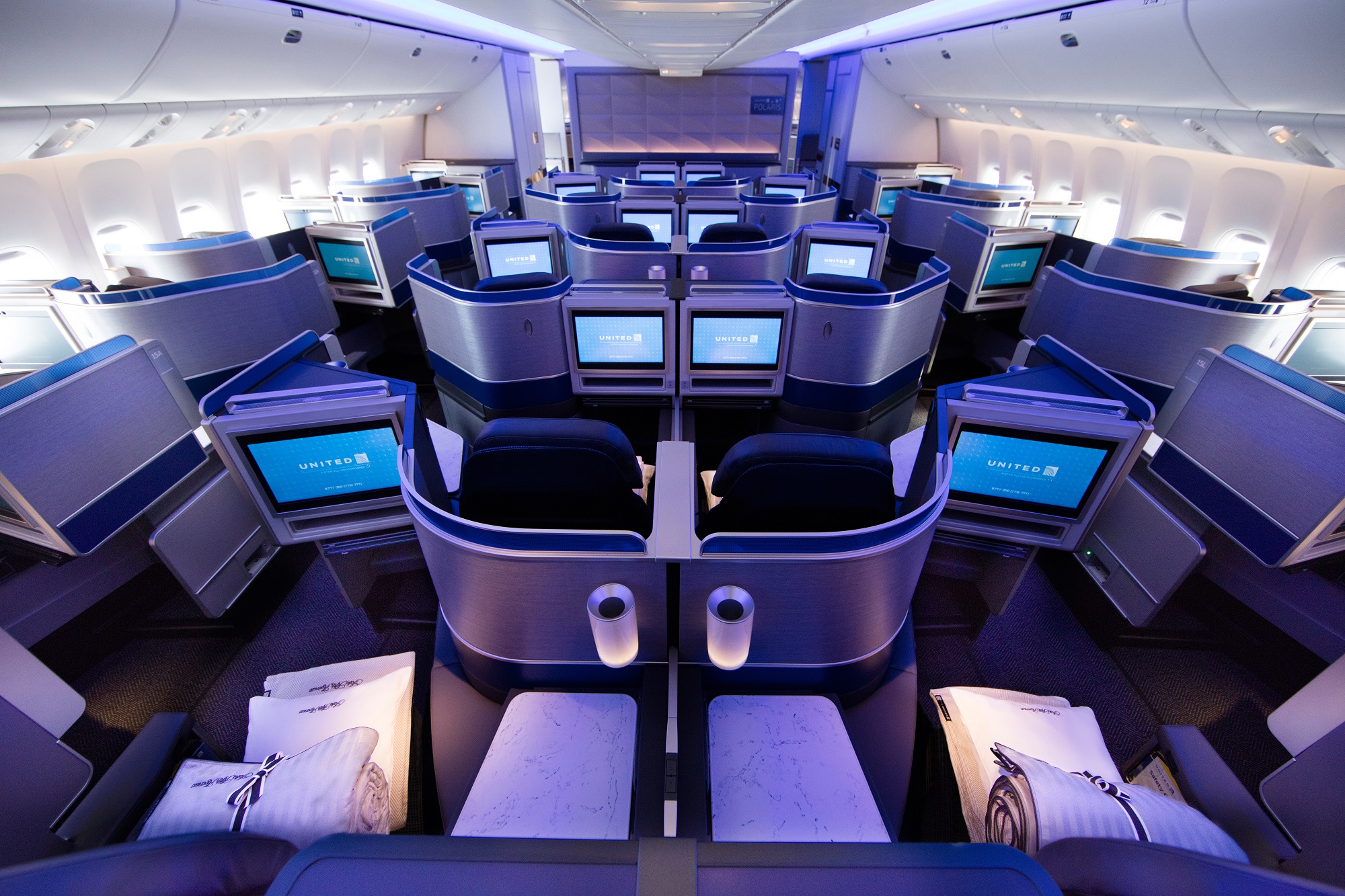
Regardless of which fare tier you book, the inflight product isn’t changing.
All Polaris passengers will still get lie-flat beds, chef-curated meals, Saks Fifth Avenue bedding, and the same privacy and service you’d expect from United’s flagship business class. Premium Plus customers will continue to enjoy larger recliners, elevated dining, and extra legroom.
Wi-Fi and inflight entertainment are also included across all fare tiers, per United’s trade release.
In other words, this is about what happens before you board, not what happens once you’re in the air. An important distinction, even if it doesn’t soften the impact for travellers who value perks like lounge access.
Lounge Access Varies by Operator
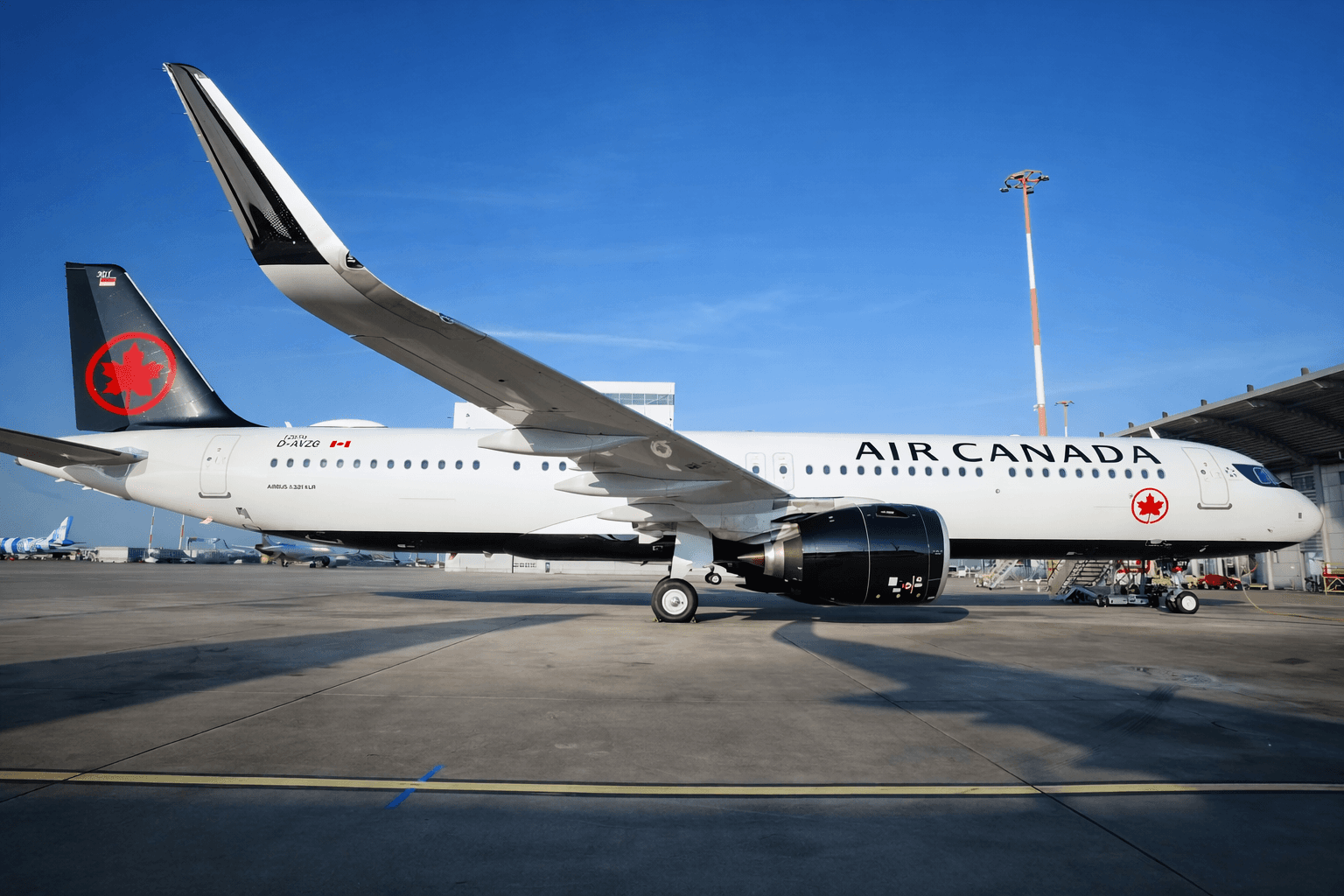
Base Polaris fares don’t just apply to flights operated by United. They also apply to codeshare flights where United sells the ticket but another airline operates the plane, including Air Canada, ANA, and Lufthansa Group carriers (Austrian, Brussels Airlines, Lufthansa, and Swiss).
The lounge you can access on a Base fare depends on which airline is actually flying the route:
- United: No Polaris Lounge. United Club access only.
- Air Canada: No Signature Suite, but Maple Leaf Lounge access is included.
- ANA: ANA business lounge access is included.
- Lufthansa Group: Eligible business lounge access is included.
For Canadians, the Air Canada detail is worth flagging. If your United ticket is operated by Air Canada, you’ll still get Maple Leaf Lounge access on a Base fare. You only lose premium lounge access on flights United operates itself.

What About Award Tickets?
A silver lining for Miles & Points enthusiasts: award tickets won’t book into the Base fare class.
If you’re redeeming MileagePlus miles or booking through a Star Alliance partner like Aeroplan, you’ll continue to receive the full set of Polaris perks, including lounge access and two checked bags.
Keep this in mind if you’re deciding between paying cash for a Base fare or using points. An award ticket effectively comes with a built-in perk upgrade.
However, it wouldn’t be surprising to see tiered award pricing introduced down the line, so enjoy it while it lasts.
Will Prices Actually Drop?
United is positioning this as giving travellers “more choice,” and the answer depends on how you fly.
In practice, existing lowest-priced Polaris fares are being reclassified as Base. So the price point you may have been paying before now comes with fewer included perks. To get the same experience as before, you’d need to select the Standard fare.
This is similar to what happened when airlines introduced Basic Economy a decade ago. The lowest fares stayed, but some of the benefits that came with them shifted to higher tiers.
Travellers who don’t need seat selection, only check one bag, and don’t use the Polaris Lounge may not notice much of a difference. For those who do value those inclusions as part of the business class experience, the Standard or Flexible fare is likely the better fit.
Key Details for Canadians
United operates a large network of flights from Canadian cities, and many Canadian travellers connect through US hubs like Newark, Chicago, and San Francisco on long-haul international itineraries.
If you’re booking a paid Polaris ticket routing through a US hub, you’ll now need to pay attention to which fare tier you’re purchasing. It’s also worth noting that MileagePlus Premier members, Star Alliance Gold members, and eligible United co-branded cardholders will still receive their standard checked bag benefits even on Base fares.
For those chasing MileagePlus Premier status, there’s a catch: Base fares earn PQP but not PQF. If you’re relying on flight segments to qualify, Base fares won’t count toward that requirement.
It’s also worth noting that Neo Financial and United have announced a partnership to bring a MileagePlus co-branded credit card to Canada. If that card follows the pattern of other United co-branded cards, it could include a free checked bag on United flights, which would help offset the Base fare’s reduced baggage allowance. We’ll be watching the card’s launch details closely.
For now, the safest approach is to redeem points for Polaris when possible, since award tickets remain unaffected by these changes.
Conclusion
If you typically buy the cheapest available Polaris fare on cash tickets, you’ll likely see fewer inclusions going forward. If you redeem points through MileagePlus or Aeroplan, nothing changes for now.
Whether this qualifies as “more choice” or simply unbundling depends on how you travel. Passengers who only care about the seat and the onboard service may not notice a difference. Those who value lounge access, flexibility, and seat selection as part of the business class experience will need to budget accordingly.
For now, this is one more reason to lean on points redemptions for United’s long-haul premium cabins, and to read the fare rules carefully when booking with cash.

Jason thrives on connecting with the heart of a destination, seeking out experiences that go beyond the guidebooks.
First-year value
$336
Monthly fee: $15.99
• Earn 1,250 points per month upon spending $750 per month for 12 months
Earning rates
Key perks
- Transfer to airline and hotel partners
Monthly fee: $15.99
• Earn 1,250 points per month upon spending $750 per month for 12 months
Earning rates
Key perks
- Transfer to airline and hotel partners